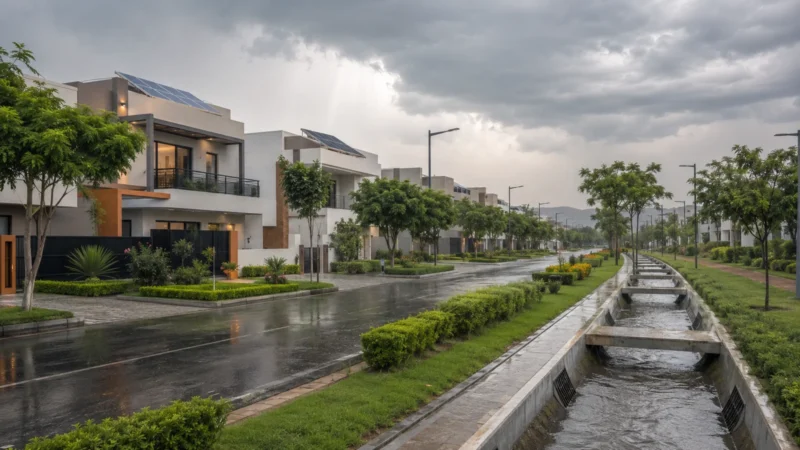
Property buying in Pakistan is changing. For many years, buyers mostly judged a plot, house, apartment or farmhouse through the usual formula: location, developer name, access road, possession, transfer status, current market price and expected profit. These factors still matter, but they no longer complete the picture. A property can be in a good location and still carry hidden risk if the street floods, the water supply is weak, the house remains too hot in summer, or the society has no long-term maintenance system.
This is why the discussion around eco-friendly and climate-safe property is becoming important. It is not only an environmental topic. It is now a real estate investment topic. A buyer who ignores flood risk, drainage, water security and heat comfort may still buy a property, but the future resale discussion can become weaker. A tenant may avoid a house that has water shortage or repeated seepage. A family may prefer a better-drained sector even if it is slightly more expensive. A commercial buyer may hesitate to invest in a basement shop if the surrounding drainage is not reliable.
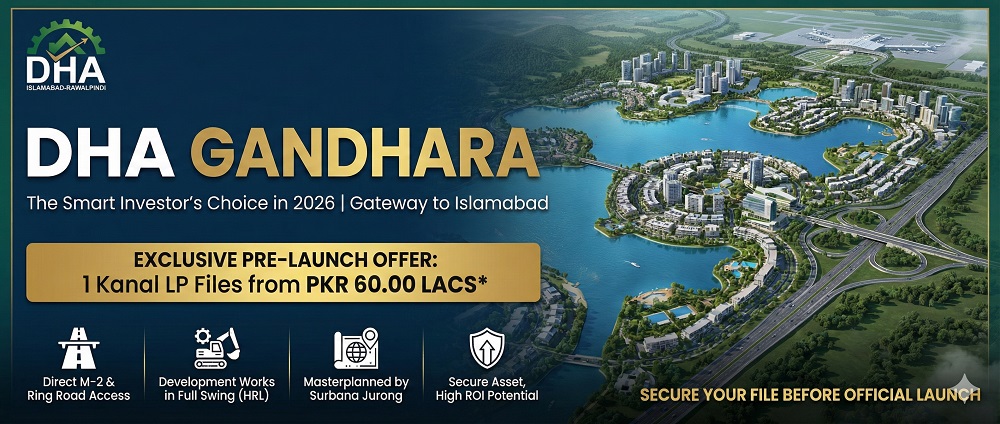
In Pakistan, many housing societies now use words like eco-friendly, green living, smart city, lake view, botanical garden, farmhouse lifestyle and nature-friendly development. These words attract buyers because people want cleaner, safer and more comfortable living. But a green brochure is not enough. A society becomes valuable only when its green planning reduces real risks. Parks should not only look beautiful; they should also help with shade, cooling and rainwater absorption. Open spaces should not only increase lifestyle appeal; they should also protect natural drainage and reduce pressure on crowded cities. Water features should not only be used for marketing; they should be connected with responsible water management.
Manahil Estate has already discussed eco-friendly housing societies in Islamabad, but this article goes deeper. The main question here is simple: when does eco-friendly property become real future value, and when is it only marketing?
Why Eco-Friendly Housing Societies Are Becoming Popular in Pakistan
The trend of eco-friendly housing societies in Pakistan is not accidental. It is connected with the problems people now experience in cities every day. Major urban areas are becoming hotter, more congested and more expensive to live in. Many localities face poor air quality, water pressure issues, traffic congestion, weak drainage and rising electricity bills. Families want cleaner surroundings, more greenery, wider streets, better parks, safer walking areas and lower daily stress.
Investors are also becoming more careful. In the old market, many investors bought files mainly for short-term gains. They followed balloting news, road announcements and dealer activity. But after years of uncertainty in speculative file trading, serious buyers are now giving more importance to legal status, possession, actual development, livability and resale safety. This is why buyers are more interested in approved, developed and well-managed societies than paper promises.
Eco-friendly housing appeals to both end users and investors because it promises a better living environment. A society with green belts, parks, water bodies, walking tracks, shaded streets and low-density planning feels more attractive than a concrete-heavy locality. But the buyer must ask whether these features are only visual or whether they solve real problems. If green areas reduce heat, improve walkability, absorb rainwater, support groundwater recharge and remain maintained after possession, they add value. If they exist only at the entrance gate or in the brochure, they do not protect the buyer.
For Pakistan, this is especially important because climate pressure is increasing while urban development is expanding quickly. We cannot afford housing schemes that create more runoff, more heat, more groundwater pressure and more maintenance problems. The next generation of housing societies must reduce pressure on cities, not add to it.
The Real Difference Between Eco-Friendly Marketing and Climate-Safe Development
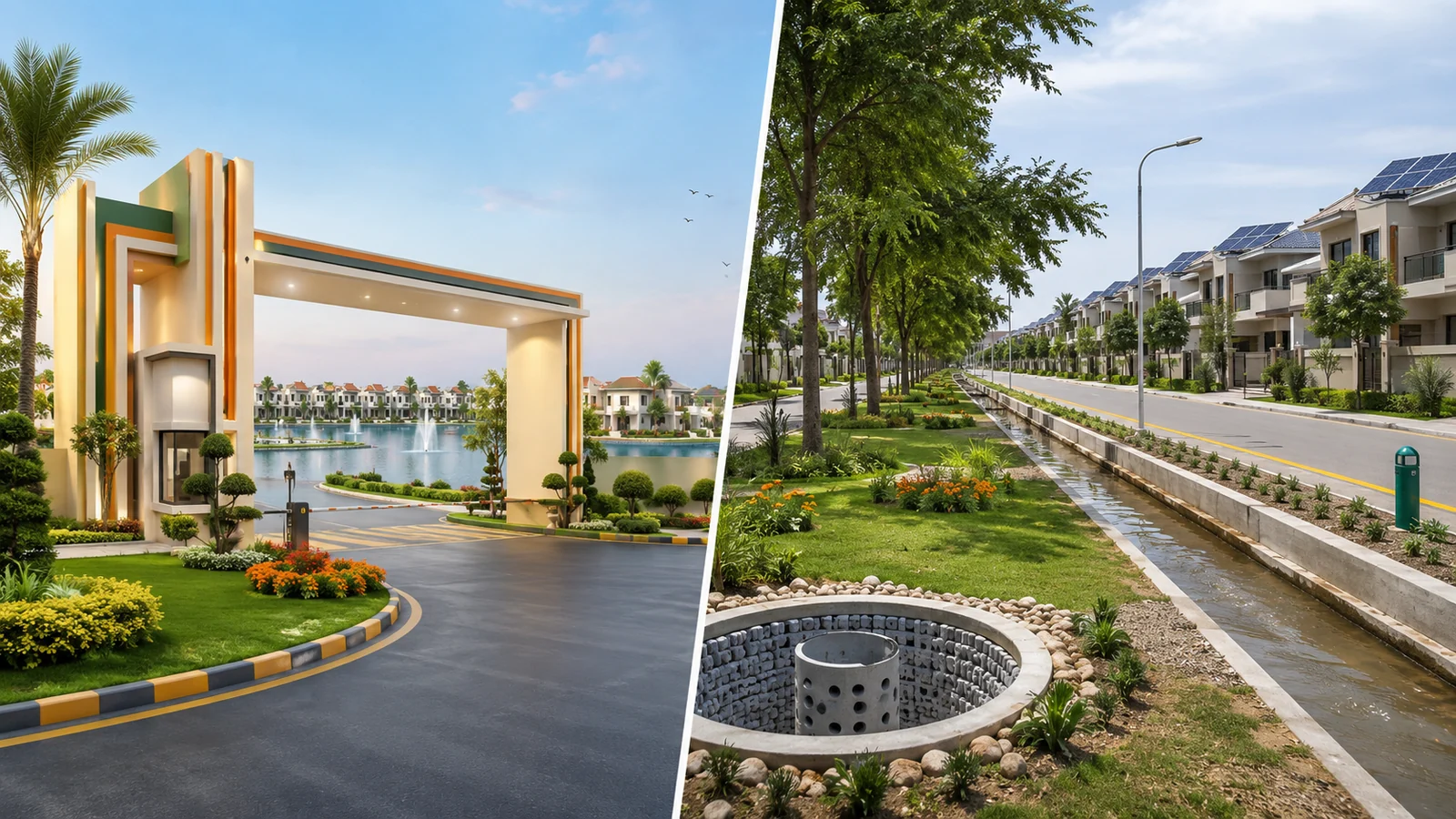
The difference between eco-friendly marketing and climate-safe development is the difference between appearance and performance. A society can look green in drone videos, but if rainwater still collects in streets, the green claim is weak. A house can have a modern front elevation, but if it becomes unbearably hot in summer, it is not energy-efficient. A farmhouse can have open land, but if there is no reliable water source or access road during rain, the lifestyle value is incomplete.
A truly climate-safe project reduces risk for residents and investors. It protects natural drains instead of covering or narrowing them. It plans road levels and stormwater outfalls before selling plots. It uses parks and open spaces as part of water absorption and heat reduction, not only beautification. It has a realistic water source, rainwater harvesting, recharge wells and storage capacity. It encourages better house design through ventilation, roof insulation and solar readiness. It also has a maintenance system that continues after possession.
Marketing becomes risky when a developer sells green words without showing the system behind them. Lakes, parks, farms and hill views can all create value, but only if they are backed by engineering, legal approval and maintenance. A buyer should not pay a premium only because a project uses the word eco-friendly. The premium is justified when the project reduces real future risks and improves long-term livability.
Flood Risk Is Now a Property-Value Issue
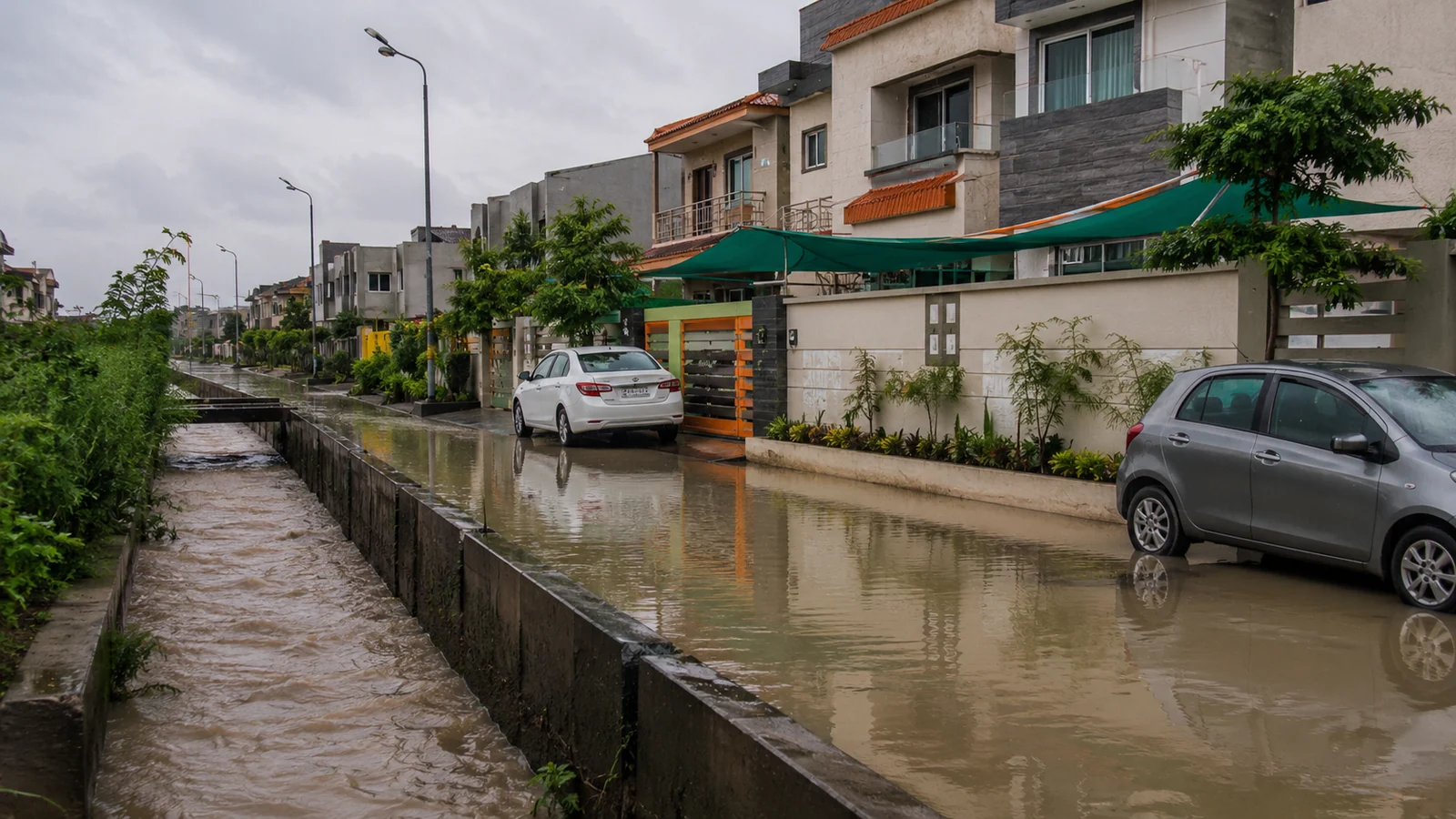
Flood risk is one of the clearest examples of why eco-friendly and climate-safe property buying has become important in Pakistan. For a long time, buyers treated flooding as a seasonal city-management problem. But recent events show that flooding is also a property-value issue. When water enters a housing society, the damage is not limited to one rainy day. It affects house condition, repair cost, buyer confidence, rental demand and future resale.
This matters especially for housing schemes because societies are often sold through branding, entrance gates, road networks, parks, commercial areas and lifestyle promises. These features matter, but they do not replace the basic question: where will the water go during heavy rain or river flooding? If a society is near a river, nullah, natural watercourse or low-lying belt, then drainage, land elevation, embankments, culverts, road levels and flood protection become part of the investment decision.
The 2025 flooding in Park View City Lahore is a strong example. Dawn reported that floodwater accumulated up to five to six feet in parts of the society on Multan Road and damaged houses, valuables and structures. The report also mentioned that many houses in several blocks were submerged, and residents had to leave their homes. For property buyers and investors, the lesson is not simply that one society faced flooding. The lesson is that premium branding, populated blocks and high-value houses do not remove flood risk if the surrounding river system, land level and protection infrastructure are not strong enough.
This is where eco-friendly planning becomes more than a marketing phrase. A future-ready society should not only create parks and green belts for beauty. It should use open spaces, natural buffers, water channels, retention areas, recharge systems and protected drainage corridors as part of flood-risk reduction. If green spaces are planned only for marketing, they may not protect value. If they are planned as infrastructure, they can reduce heat, slow runoff, absorb water and improve long-term livability.
The same lesson applies to Islamabad and Rawalpindi. Dawn reported a July 2025 incident in which a man and his daughter were swept away with their vehicle in a housing society in the Sihala police limits. The report said their car plunged into a nullah running through Phase 5 of the society, and that the nullah flowed into the River Soan. This type of incident shows why buyers must take natural drains seriously. A nullah may look dry most of the year, but during intense monsoon rain it can become a dangerous water channel. For property buyers, this means nullah distance, bridge level, road slope, culvert design and emergency access should be checked before buying.
Rawalpindi’s Nullah Lai and Leh Nullah give another long-term lesson. These natural drainage systems have repeatedly shown how low-lying areas, urban growth, encroachments, heavy rainfall and weak drainage capacity can combine to create recurring flood risk. Buyers should not think this problem belongs only to older city areas. The same mistake can happen in new societies if natural drains are narrowed, blocked, covered or converted into plots without proper hydrological planning.
For investors, the point is simple: flood risk can become a hidden discount on future resale. A buyer may still purchase a property in a flood-exposed location, but they will negotiate harder. Tenants may avoid basements or lower streets. Families may prefer higher and better-drained blocks. Over time, banks, insurers and regulators may also become more careful about climate-exposed property. This is why climate-safe buying is not emotional environmental talk. It is practical investment protection.
What Housing-Scheme Buyers Should Learn from Recent Flooding
The first lesson is that a famous society name is not enough. Every block, street and plot should be checked on its own ground condition. A high-demand society can still have vulnerable pockets. One street may be safe while another may sit in a low point. One block may have better drainage while another may collect water because of slope or road design.
The second lesson is that river and nullah proximity should never be ignored. If a society is close to the Ravi, Soan, Korang, Nullah Lai or any natural water channel, the buyer should ask how floodwater is managed. Is there a safe setback? Are embankments complete? Are culverts large enough? Are roads and bridges above expected flood levels? Has the society ever experienced water accumulation? These are not technical questions only for engineers. They are basic investment questions.
The third lesson is that basements require extra caution. Basement shops, basement parking and lower-ground portions can be attractive because they offer space and commercial utility. But in weak drainage zones, they can become the first point of damage during heavy rain. A basement in a well-managed and well-drained building is different from a basement in a flood-prone street.
The fourth lesson is that green planning should be functional. Parks, open spaces and green belts should not only improve beauty. They should help with stormwater absorption, heat reduction and safe drainage. In mature markets, this thinking is already part of sustainable drainage. Pakistan needs to apply it in a practical local way.
Water Supply Is the Hidden Test of a Housing Society
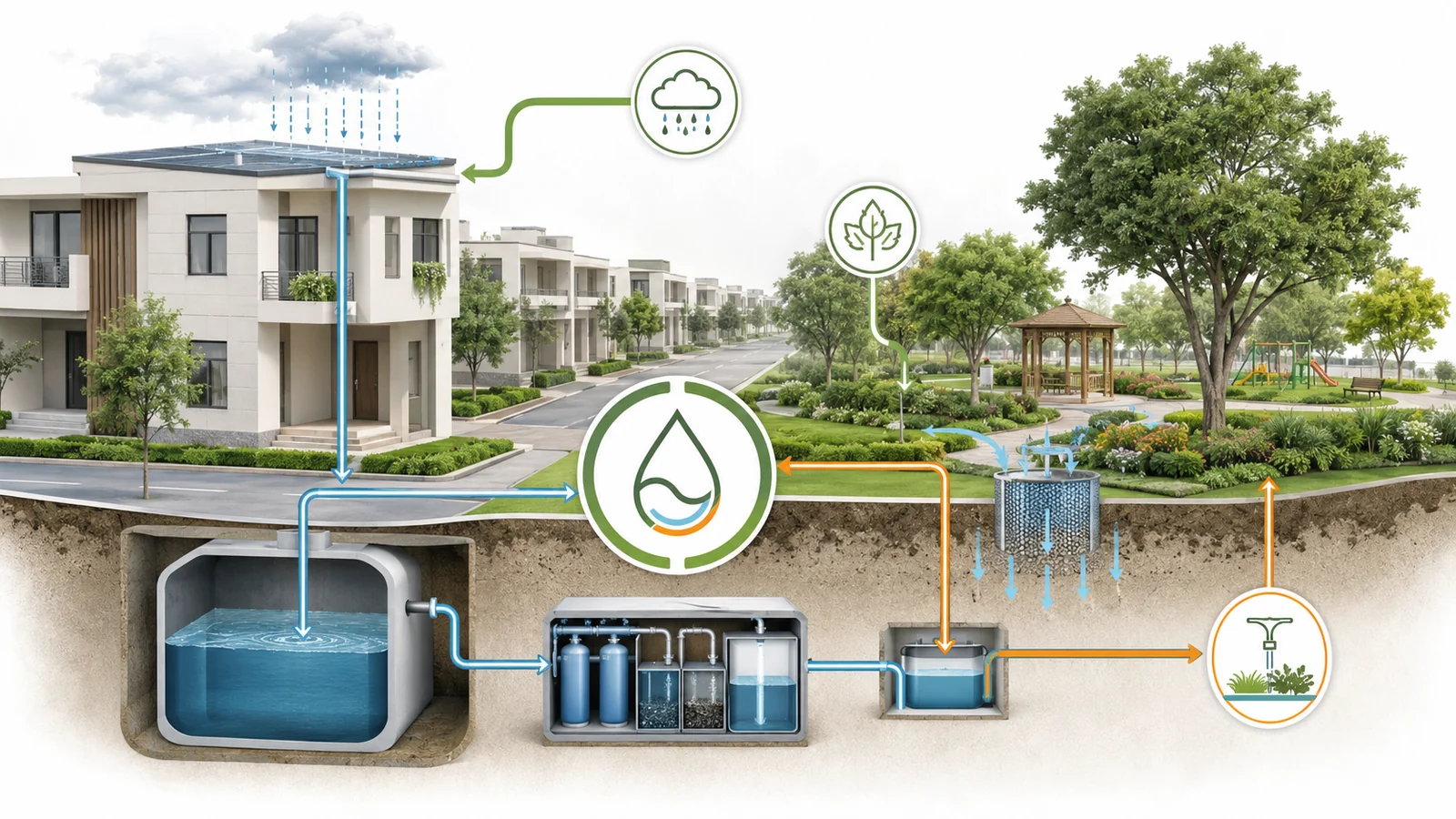
Water is one of the most underestimated real-estate issues in Pakistan. Buyers often ask about electricity, gas, road access and possession, but they do not always investigate water with the same seriousness. This is a mistake. A society without reliable water becomes difficult to live in, even if roads and parks look good.
Water scarcity affects value in several ways. It increases monthly household cost if residents depend on tankers. It creates stress for families during summer. It makes rental properties less attractive. It weakens the maintenance of parks and green belts. It also makes farmhouse projects difficult because greenery and open land require responsible water planning.
CDA’s 2026 water initiatives show that this issue is now serious at the city level. CDA reported that approximately 100 rainwater recharge wells and 20 water storage tanks were planned in Islamabad, and that rooftop rainwater harvesting had been made mandatory under CDA building bylaws. This is a major signal for real estate buyers. It means rainwater harvesting and groundwater recharge are no longer optional environmental decoration. They are becoming part of responsible urban development.
For housing societies, the key question is not only whether water is available today. The real question is whether water will remain available when more houses are built and more families move in. A society may feel comfortable when only a small portion is occupied. But what happens when occupancy increases? Does the society have reservoirs? Are recharge wells installed? Is rainwater harvesting encouraged? Is treated wastewater reused for landscaping? Is groundwater extraction controlled? These questions directly affect long-term livability and resale.
Eco-friendly societies must be especially careful. Parks, lakes, golf-style landscaping and wide green belts require water. If a society uses high-water landscaping without reuse or recharge, the green concept becomes environmentally and financially weak. A better approach is native plantation, treated wastewater reuse, rainwater storage, recharge wells and landscaping that matches local climate.
Heat and Electricity Costs Are Becoming Resale Factors
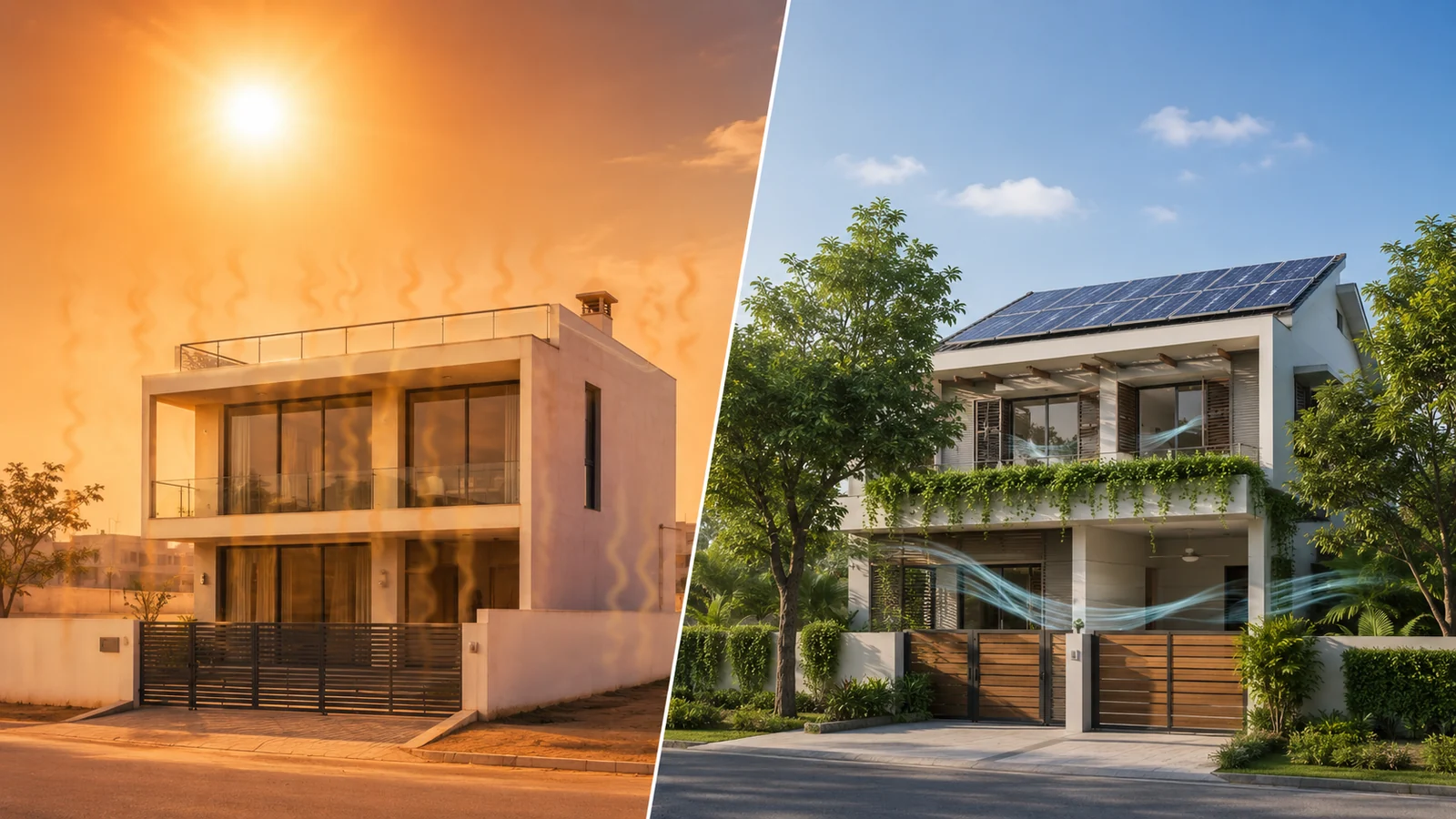
Heat is another property risk that many buyers underestimate. It does not always show during a short site visit. A house may look excellent in pictures and during evening visits, but its real comfort is tested in May, June and July. In many Pakistani cities, heat is now a monthly cost because it directly affects air-conditioning use, solar demand, roof treatment, insulation and electricity bills.
Many houses in Pakistan are still designed more for appearance than climate comfort. Large glass fronts, dark tiles, unshaded windows, uninsulated roofs and poor ventilation may create a modern look, but they can make the house hotter. Top-floor apartments face similar issues when the roof is not treated properly. Commercial plazas with glass facades may look premium but can become expensive to cool if the design is not climate-conscious.
This matters for resale because future buyers will become more sensitive to monthly running cost. A house with good orientation, shaded openings, roof insulation, cross ventilation and solar readiness will have a practical advantage. Families may prefer it because it is more comfortable. Tenants may prefer it because it reduces energy burden. Investors may prefer it because it is easier to rent and resell.
Pakistan already has a policy direction for this. The Energy Conservation Building Code 2023 focuses on energy-efficient design, passive design, building insulation, efficient appliances, renewable energy and energy management systems. For real estate, this means energy efficiency should not remain a technical topic for engineers only. It should become part of normal buyer discussion.
A serious buyer should therefore look beyond marble, tiles and elevation. The buyer should ask whether the roof has insulation, whether rooms have cross ventilation, whether west-facing windows are shaded, whether there is solar space, whether the top floor is treated and whether the house will remain comfortable during peak summer. This is not overthinking. This is future resale logic.
Climate-Safe Apartments and High-Rise Projects in Pakistan
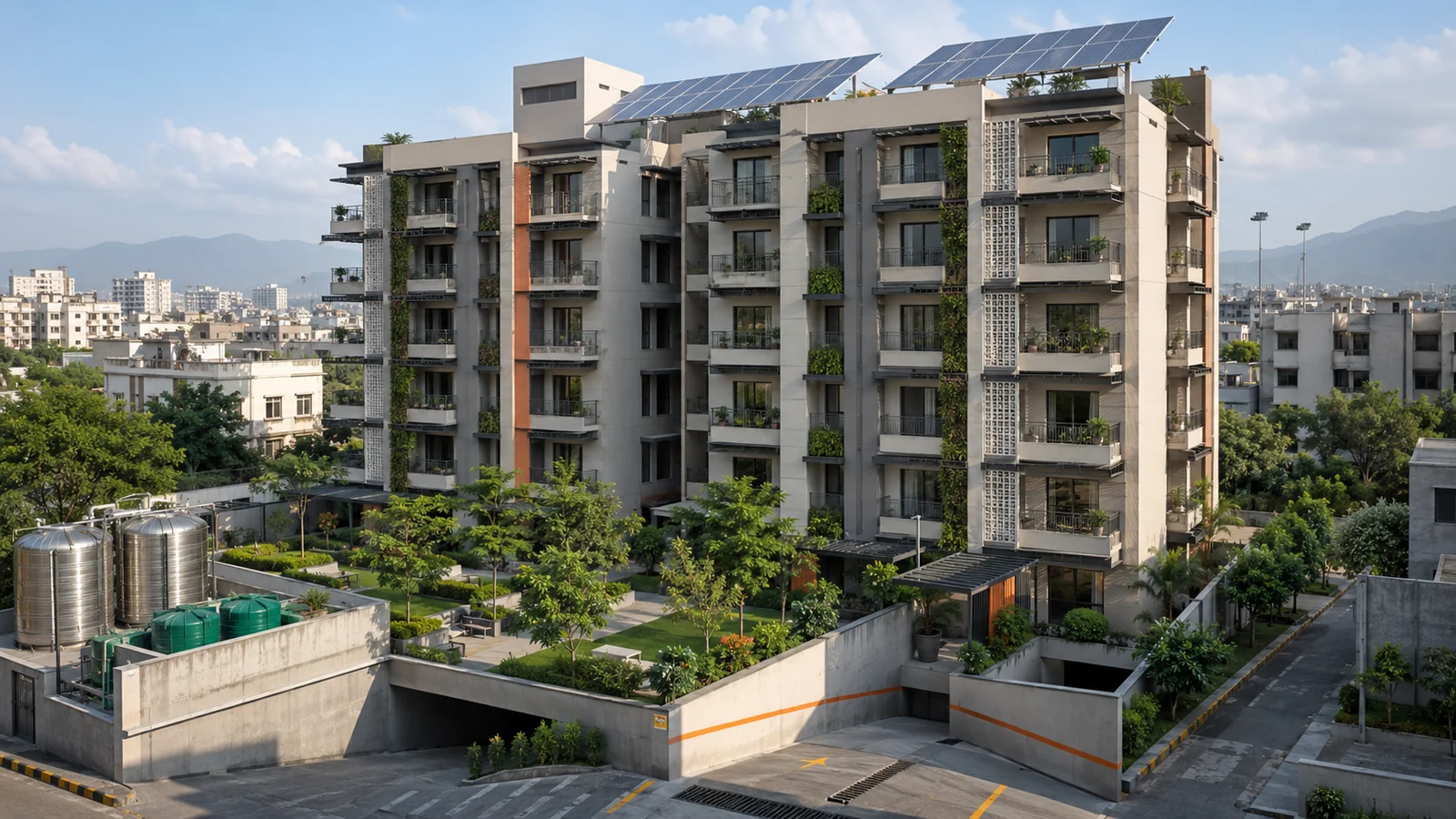
Apartments and high-rise projects are becoming more common in Islamabad, Rawalpindi, Lahore and other major cities because buyers want secure living, smaller investment sizes, rental income and easier maintenance compared with large houses. But apartment buying has a different risk profile. In a house, the owner can improve the roof, install solar, fix drainage around the entrance or upgrade water storage. In an apartment building, the buyer depends on the developer, building management and shared systems.
This is why climate-safe due diligence is very important in apartment and mixed-use projects. A good location and attractive floor plan are not enough if the building has weak basement drainage, poor ventilation, limited water storage, high heat exposure, unreliable lifts or poor maintenance. These issues directly affect rental demand, service charges, tenant satisfaction and resale confidence.
Basement parking is one of the first things buyers should check. In many Pakistani apartment and commercial projects, basements are marketed as a convenience, but they can become a liability if the ramp, drain grates, sump pumps and stormwater outlets are not properly designed. During heavy rain, a weak basement drainage system can damage vehicles, electrical systems and building services. For investors, this becomes a resale and rental risk because tenants and buyers remember buildings where basements flood.
Heat is another major issue in apartments. Top-floor units can become uncomfortable if roof insulation and heat treatment are weak. West-facing apartments with large unshaded glass may look modern, but they can increase cooling cost in summer. Poor ventilation can make smaller units feel closed and dependent on air-conditioning. A climate-conscious apartment building should use shaded balconies, ventilated corridors, treated roofs, efficient façade design and practical window placement.
Water supply is also critical. Apartment buildings concentrate many families on one plot, so water pressure, underground storage, overhead tanks, filtration, pumping systems and backup arrangements matter more than in a single house. If building management is weak, residents may face regular complaints even when the location is good. Future buyers will increasingly prefer apartment projects where water systems, backup power and maintenance are professionally managed.
For investors, the lesson is simple: an apartment is not only a unit number and covered area. It is part of a complete building system. A good apartment project should have proper basement drainage, fire safety, ventilation, water storage, backup power, lift maintenance, solar readiness and professional building management. If these systems are strong, the apartment has better rental and resale potential. If they are weak, even a good-looking project can become difficult to hold long term.
Greenery Without Maintenance Is Not Climate Resilience
Greenery is one of the easiest things to sell in real estate. Buyers naturally like parks, tree-lined roads, lake views, open spaces and garden-style communities. In a hot and congested urban environment, greenery creates emotional comfort. It also supports resale when it is real and maintained.
But there is a major difference between green imagery and green performance. Many projects make the entrance beautiful because the entrance sells the society. The internal streets may still remain exposed, dry and concrete-heavy. Some societies plant decorative species that do not suit the local climate. Others develop parks at launch but fail to maintain them after possession. In such cases, the buyer pays for a lifestyle promise that weakens over time.
Real greenery must be planned as infrastructure, not decoration. A mature tree on a street can reduce heat, improve walking comfort and enhance the feel of a block. A park can serve as a social space, a cooling zone and, if designed properly, a rainwater absorption area. Native trees can survive better and need less water than purely ornamental plantation. Green corridors can improve movement, shade and community value. These things help the society remain livable.
This is especially relevant for projects that promote farmhouses, eco-friendly living or nature-based lifestyle. If the greenery is genuine, it should be visible beyond the main gate. The buyer should see plantation inside developed blocks, maintained parks, irrigation planning and a clear maintenance system. If green areas exist only in brochures, the buyer should treat the claim carefully.
Farmhouses and Green Living: Real Value or Lifestyle Hype?
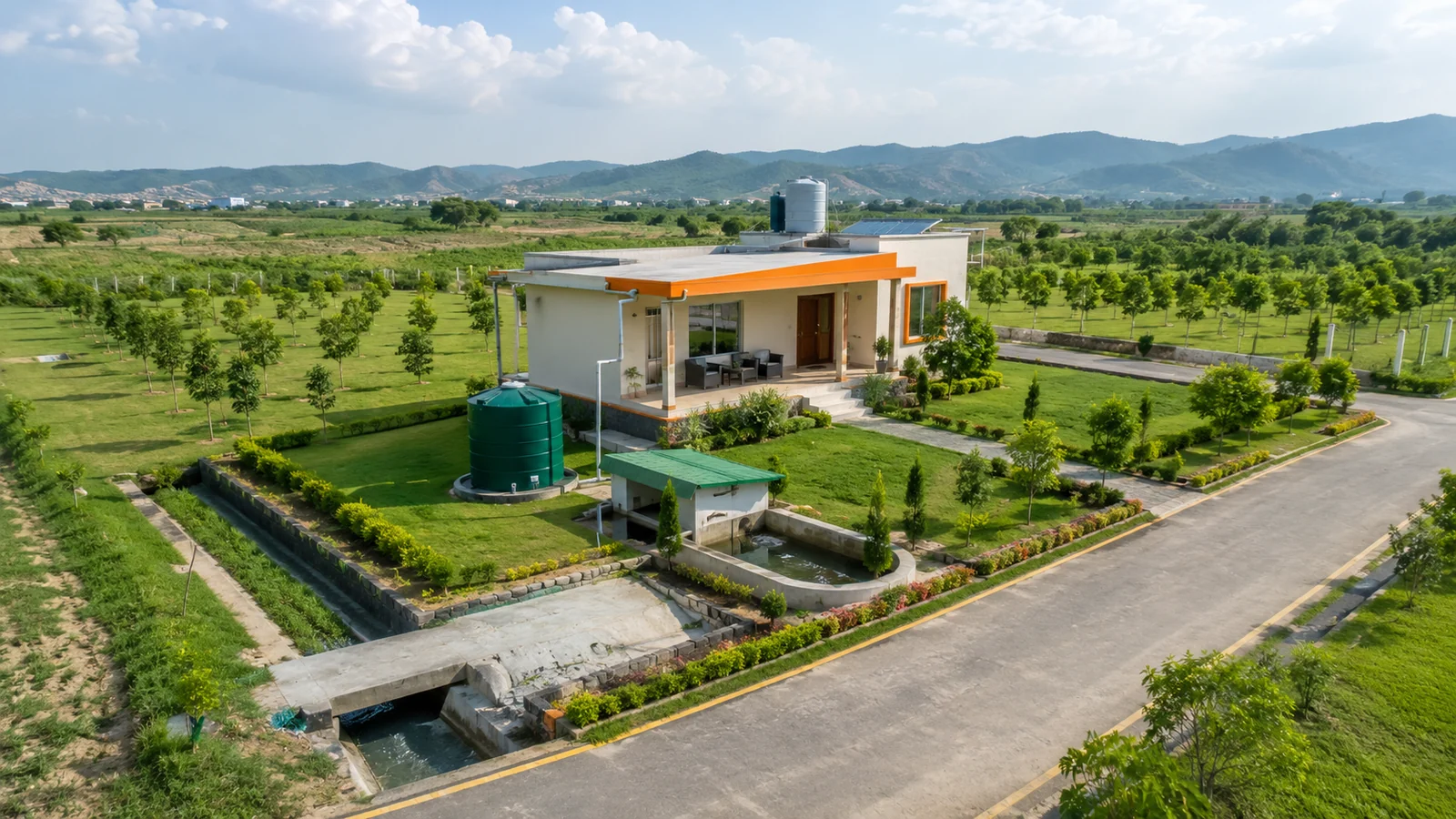
Farmhouses have strong emotional appeal in Pakistan’s real estate market. Many buyers imagine open space, fresh air, family weekends, organic farming, privacy and escape from city congestion. In Islamabad and Rawalpindi, farmhouse concepts are often discussed around areas such as Gulberg Greens, Chakri Road, Capital Smart City surroundings and other low-density belts.
Gulberg Islamabad and Gulberg Greens are important examples of this low-density and farmhouse-style market. The concept can be strong when it is legally clear, accessible and supported by water and maintenance planning. But farmhouse investment can also become risky when buyers focus only on land size and lifestyle images.
The climate question is very important in farmhouse buying because farmhouses depend heavily on water, access and maintenance. A farmhouse without reliable water is difficult to manage. A farmhouse with poor road access may be hard to use during rain. A farmhouse near a natural stream or low-lying area may face flood or erosion risk. A farmhouse in an unclear scheme may face legal and resale problems. Open land does not automatically mean safer investment.
A good farmhouse project should have clear transfer, road access, electricity plan, water source, rainwater harvesting potential, plantation strategy, wastewater disposal and maintenance arrangements. It should also have real demand, not only brochure-based excitement. For end users, a farmhouse must be usable. For investors, it must be resellable. Both depend on more than greenery.
Margalla Hills and Green-View Properties Need Careful Due Diligence
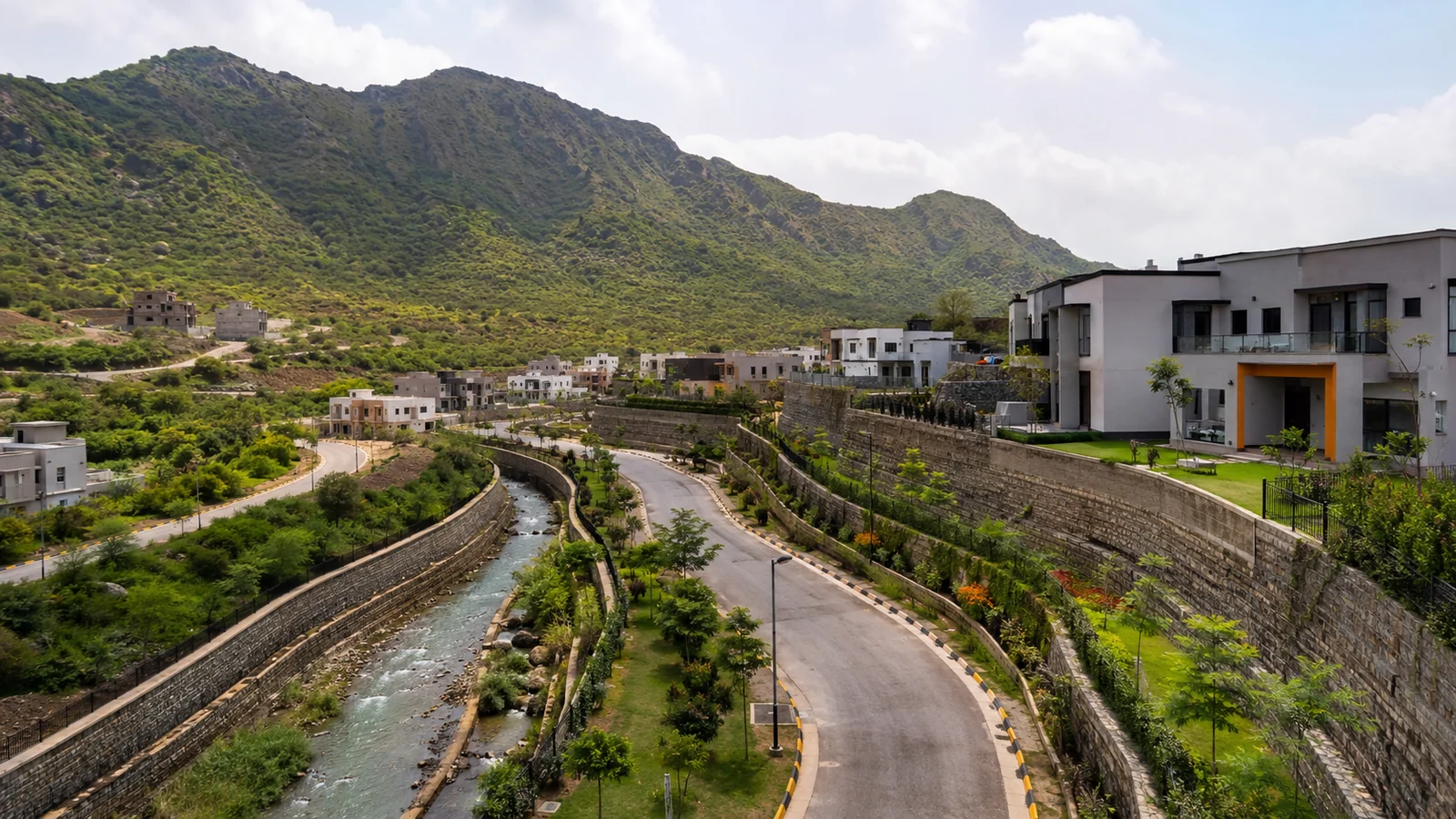
Properties near Margalla Hills, foothills and green-view locations carry a special kind of attraction. Buyers like views, cleaner surroundings, cooler perception, limited land and connection with nature. In Islamabad and nearby areas, locations linked with Margalla views, Bani Gala side, Zone IV terrain, Park View City surroundings and other hill-view belts often attract premium attention.
This appeal is real, but it should not blind the buyer. A location near nature can be valuable only if the development respects nature. Foothill and slope-side development needs careful handling because natural water channels, road gradients, retaining walls, soil stability, fire risk and environmental restrictions can all affect value. A poorly handled hill-side project can face drainage issues, access problems, erosion, legal questions and higher maintenance cost.
Recent environmental concerns around development near Margalla Hills show why buyers should be careful. WWF-Pakistan highlighted risks from development activity near Margalla Hills foothill zones, including ecological pressure and potential long-term damage. For real estate buyers, this means green-view locations should not be judged only by scenery. They should be judged by legal status, environmental compliance, slope safety, watercourse protection and long-term access.
Park View City Islamabad is useful for discussing scenic lifestyle value because of its association with Margalla-side appeal. But the same principle applies everywhere: views can add value, but views alone do not make a property climate-safe. The land must be legally clear, properly accessed, safely drained and practically developable.
DHA, Bahria, CDA Sectors and Established Areas Still Need Climate Checks
Established areas usually give buyers more confidence because infrastructure is visible. In DHA Islamabad-Rawalpindi, Bahria Town Rawalpindi and CDA sectors, buyers can inspect actual roads, houses, parks, commercial areas, drainage behavior and occupancy. This is a major advantage over paper-based or early-stage projects.
However, strong branding or development authority does not remove the need for property-level due diligence. Even in established areas, one street may be better than another. One plot may be higher and safer while another may sit in a low pocket. One house may have strong construction and ventilation while another may have seepage and heat problems. Developed areas make it easier to identify these issues, but the buyer still needs to look carefully.
For example, someone reviewing DHA Phase 5 Islamabad property listings should not only compare sector, street, size and price. The buyer should also consider road level, surrounding construction, drainage, access, tree cover, water availability and long-term comfort. Similarly, in Bahria Town or CDA sectors, the practical condition of a street and house can matter as much as the broader location name.
Developed sectors may be safer because problems are already visible. New sectors may offer better planning but carry delivery risk. Older houses may need retrofitting. Premium societies may have better maintenance but still require street-level checks. This balanced approach is more useful than blind trust or unnecessary fear.
What International Real Estate Markets Are Already Doing
Internationally, real estate is already moving toward climate-risk pricing. In mature markets, buyers, lenders, insurers and institutional investors increasingly look at whether a property is exposed to flooding, heat, wildfire, water stress or energy inefficiency. This is not just an environmental movement. It is financial risk management.
A study published in Nature Climate Change found that flood-exposed residential properties in the United States were overvalued by USD 121 billion to USD 237 billion because flood risk was not fully reflected in prices. The lesson for Pakistan is not that our market will follow the exact same numbers. The lesson is that property markets can misprice climate risk for years, and then correct suddenly when damage, insurance, lending or buyer awareness changes.
In the UK, Sustainable Drainage Systems standards show how surface-water management can be treated as part of development design rather than an afterthought. These systems encourage developments to manage rainwater through natural or semi-natural methods such as swales, permeable surfaces, retention areas and controlled discharge. The idea is simple: do not push all rainwater into overloaded drains. Slow it, store it, absorb it and release it responsibly.
In other parts of the world, cities are experimenting with sponge-city planning, water squares, green roofs, rain gardens and climate-adapted public spaces. These ideas treat parks, streets and open spaces as part of water and heat management. Instead of seeing a park only as beautification, they see it as infrastructure. Instead of seeing drainage only as underground pipes, they see it as a complete landscape system.
Green building certification is also becoming more common globally. Systems like EDGE, LEED and BREEAM help measure energy, water and material performance. EDGE, for example, requires at least 20 percent savings in energy, water and embodied energy in materials compared with a local baseline. This matters because it separates measurable performance from vague green claims.
What Pakistan Needs to Adopt
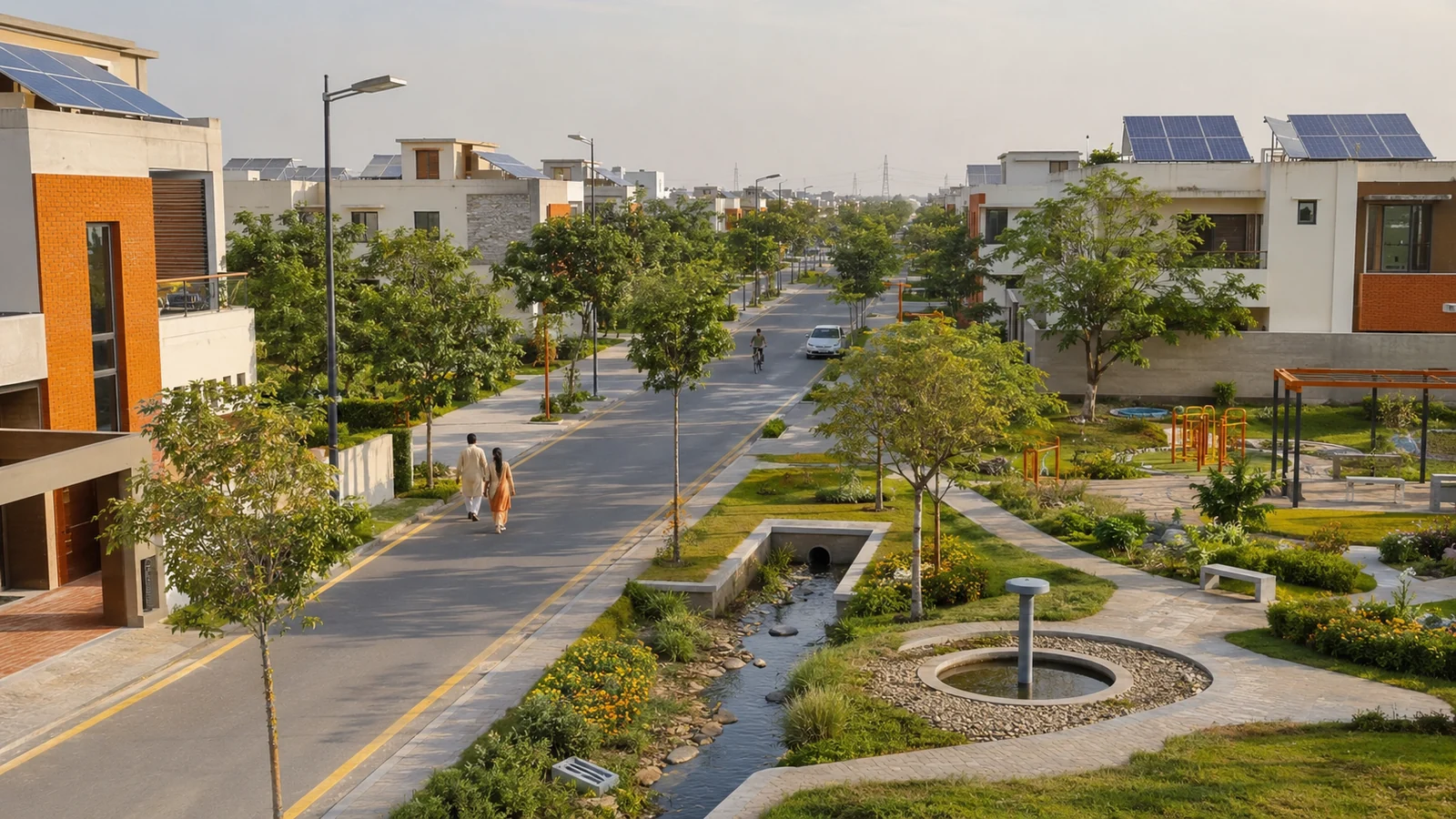
Pakistan should not copy international models blindly. Our real estate market has its own conditions: affordability pressure, weak enforcement, informal construction, file trading culture, rapid urban expansion, hot summers, monsoon pressure and water scarcity. A solution that works for a wealthy city with strong enforcement may not work in the same form here.
But the principles can be adapted. Pakistan needs practical and affordable climate-safe development. Rainwater harvesting does not have to be a luxury feature. Recharge wells can be integrated into parks, streets and public buildings. Native trees can reduce heat without excessive water demand. Cool roofs and roof insulation can improve comfort without changing the entire construction model. Permeable surfaces can reduce runoff in selected areas. Society-level water budgeting can become part of approval and marketing disclosure.
The most important adaptation is mindset. Developers should stop treating climate features as decoration. Regulators should stop approving layouts without strong drainage and water review. Buyers should stop treating green claims as automatic value. Agents should stop discussing only price movement and start discussing livability, maintenance and future resale risk.
Pakistan does not only need luxury green buildings for a small premium segment. It needs normal houses, apartments, farmhouses and housing societies to become more practical, water-aware, heat-aware and drainage-aware. That is how climate-safe development becomes useful for the wider market.
What Buyers Should Check Before Investing
A serious buyer should still check location, NOC, possession, access and market rate. But after that, the buyer should walk the site with a climate lens. This does not mean every buyer needs to become an engineer. It means the buyer should ask better questions and observe carefully.
Before buying a plot, check whether the plot is lower than the road, whether there is any nearby nullah or natural drain, whether water stands in the street after rain, whether stormwater drains are complete and whether the land is filled or original hard ground. Also check whether the society is approved, whether the block is legally part of the approved layout and whether possession is real.
Before buying a house, inspect seepage marks, basement smell, water stains, sewerage issues and entrance level compared with street level. Then check heat comfort: roof insulation, ventilation, west-facing rooms, window shade and solar space. A house that looks beautiful but remains too hot or too damp can become costly later.
Before buying an apartment, focus on building systems. Basement drainage, fire exits, water storage, ventilation, backup power, lift maintenance and building management are critical. A good apartment is not only a good floor plan. It is a properly managed building.
Before buying a farmhouse, check legal clarity, road access, electricity, water source, rainwater harvesting potential, natural watercourse risk and maintenance responsibility. A farmhouse should be judged as a real usable property, not only as a lifestyle image.
How Climate Resilience Can Affect Future Resale Value
Climate resilience can affect resale value because it affects confidence. Buyers pay more confidently for properties that feel safe, practical and easy to maintain. A house with lower cooling cost, reliable water, no seepage and good street drainage gives comfort to the next buyer. A plot in a well-drained and properly maintained society gives confidence to investors and families. A farmhouse with legal clarity, water and access has stronger resale logic than one that only offers open land.
On the other hand, climate-weak properties may face what can be called a risk discount. A buyer may still purchase them, but only at a lower price or with hesitation. Repeated flooding, water shortage, high energy cost, poor access, weak maintenance and uncertain approvals all reduce confidence. These issues may not always appear in official price charts, but they appear during negotiation.
This is why climate-safe property buying should be seen as future-value protection. It does not guarantee profit, but it reduces avoidable risk. In a market where buyers are becoming more practical, properties that remain livable will have an advantage.
Final Verdict: Eco-Friendly Property Has Value Only When It Reduces Real Risk
Eco-friendly property in Pakistan can have strong future value, but only when it is supported by legal approval, engineering, drainage, water security, energy-efficient design and long-term maintenance. Without these, green claims remain marketing.
A housing society is not climate-safe because it has a lake in the brochure or trees near the entrance. It is climate-safe when it can handle heavy rain, provide water, reduce heat, control energy costs and remain livable for families over time.
The future of property buying in Pakistan will not only be about where a property is located. It will also be about whether that property can survive, perform and remain comfortable in a hotter, wetter and more water-stressed Pakistan.
For buyers who want practical guidance before investing in Islamabad, Rawalpindi or surrounding housing societies, contact Manahil Estate for location-focused, legally aware and future-ready property advice.
FAQs About Eco-Friendly and Climate-Safe Property in Pakistan
What is climate-safe property buying in Pakistan?
Climate-safe property buying means checking whether a property is safe from flooding, reliable in water supply, comfortable in heat, energy-efficient, legally clear and practical for long-term living and resale. It adds climate and livability checks to normal property due diligence.
Are eco-friendly housing societies in Pakistan really worth it?
Eco-friendly housing societies can be worth it when the green concept is backed by real infrastructure, drainage, water planning, plantation, maintenance and legal approval. If a project only uses green words, lake renders or park images without delivery, buyers should treat it carefully.
How does flood risk affect property value?
Flood risk affects value because repeated water accumulation creates repair costs, seepage, access problems, basement damage and buyer hesitation. Even a good location can lose confidence if a street or block develops a flood-prone reputation.
Why is water supply important before buying property?
Water supply is important because daily living depends on it. Weak water supply can increase tanker cost, reduce rental demand, create family discomfort and weaken the long-term reputation of a society. Buyers should always ask about source, storage, recharge and summer reliability.
Are farmhouses more climate-safe than normal houses?
Farmhouses are not automatically climate-safe. They offer open space and greenery, but they need legal clarity, water source, drainage, access road, electricity and maintenance. A farmhouse without water and access can become difficult to use and resell.
Is property near Margalla Hills a good investment?
Property near Margalla Hills or other green-view locations can have strong lifestyle appeal, but buyers should check legal status, environmental approval, slope stability, drainage, fire risk and access before paying a premium for views.
Can heat-resistant homes have better resale value?
Yes. Homes with insulation, ventilation, shade, roof treatment and solar readiness can become more attractive as electricity costs rise. Such homes are more comfortable for families and may have better rental and resale appeal.
What is greenwashing in real estate?
Greenwashing means presenting a project as eco-friendly or sustainable through words, renders, lakes, parks or trees without real environmental planning, water management, drainage, certification or maintenance behind it.
What should buyers ask before trusting a green housing project?
Buyers should ask whether the project is approved, whether drainage is complete, where rainwater goes, what the water source is, whether recharge wells or rainwater harvesting exist, whether parks are maintained, whether possession is available and whether the green features are visible on ground.