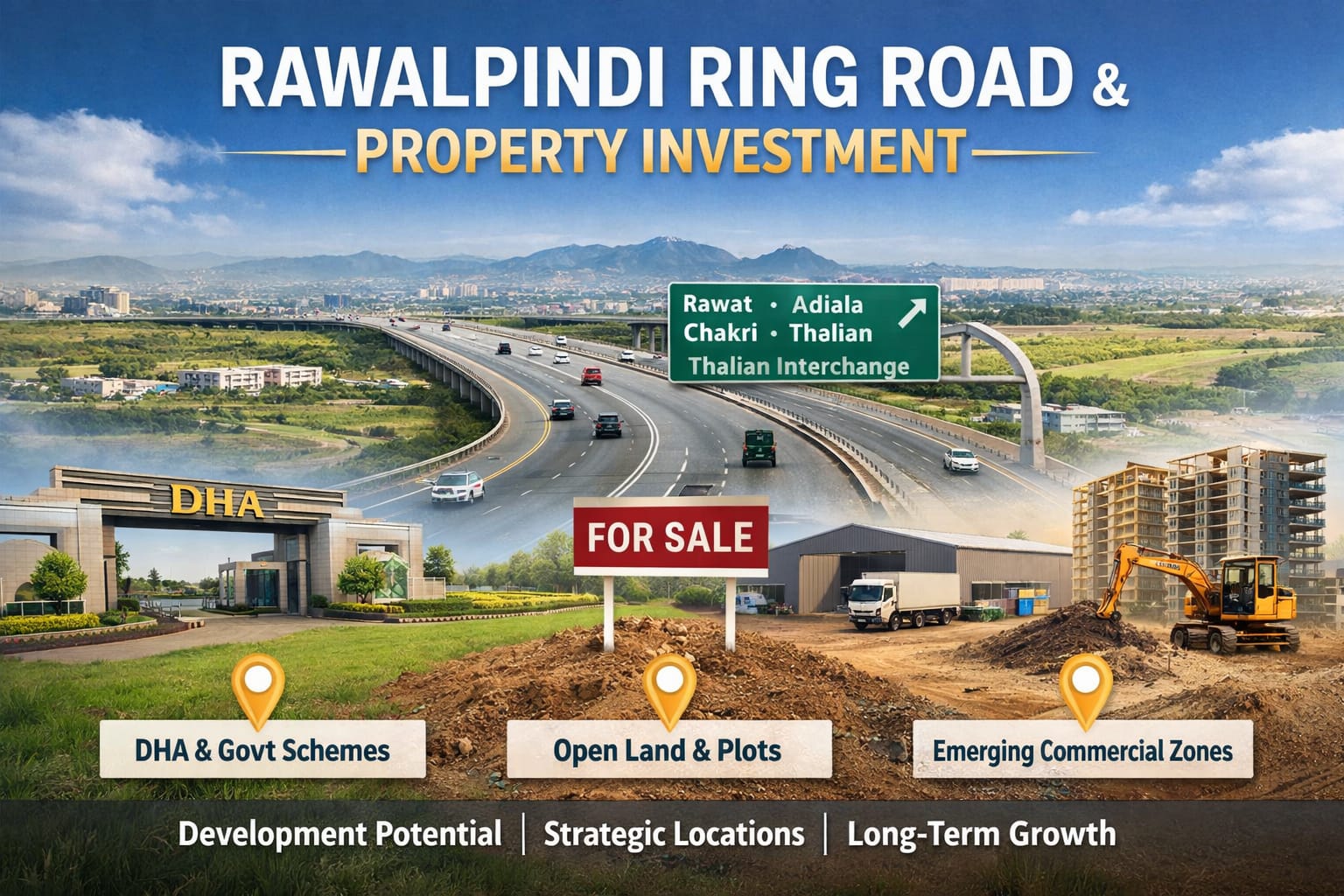
The Rawalpindi Ring Road is one of the most important infrastructure projects for the wider Rawalpindi-Islamabad property market. As a major corridor connecting the GT Road side with the Thalian and motorway side, it is expected to do much more than reduce travel time.
It can reshape how people move, where businesses shift, how freight travels, and which outer belts become more valuable for living, trade, warehousing, and long-term development.
Whenever a ring road is built around a large urban region, the impact on property prices usually begins with improved access, but it does not stop there. Over time, the road starts changing commercial patterns, residential demand, transport routes, and land utility.
In Rawalpindi’s case, that broader impact is what makes the Ring Road important not only for housing societies, but also for open land, roadside commercial belts, and future development corridors.
Why Ring Roads Change Property Markets
A ring road changes the real estate market by pulling movement away from overcrowded city centres and redistributing it toward outer zones. Once heavy traffic, transport services, warehouses, bus movement, distribution activity, and roadside commerce begin shifting toward a new corridor, nearby land starts gaining practical value.
Land that once looked too far from the city can suddenly become useful for housing, business, logistics, and mixed commercial activity.
This is why ring roads often affect much more than just travel time. They change the direction of urban growth. Areas near interchanges, approach roads, and major connecting arteries often become more important because they gain access to a wider movement network. In simple terms, accessibility creates utility, and utility creates value.
What Lahore Already Taught the Market
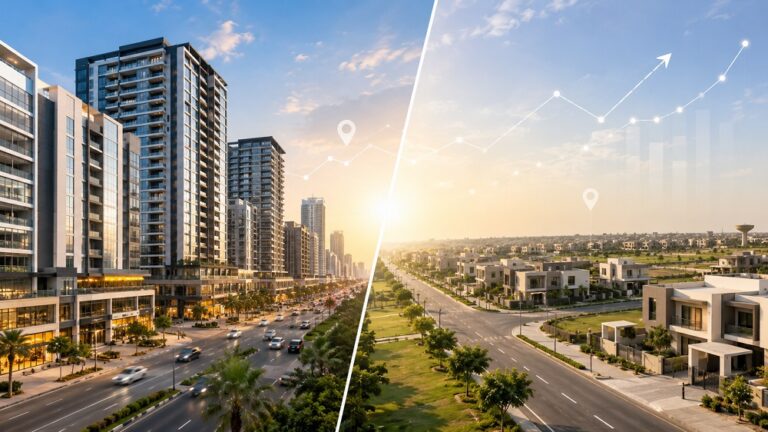
The best local example comes from Lahore. The Lahore Ring Road did not just make travel easier. It changed the market’s perception of southern and outer Lahore. Areas that were once considered distant gradually became more practical for residential use, more attractive for commercial activity, and more relevant for long-term investment.
The biggest shift was not only in prices, but in confidence. When access improves, end-users begin seeing outer locations as part of the normal city network rather than separate or inconvenient pockets.
Lahore also showed an important pattern. Price movement is usually strongest where infrastructure creates real usability. Interchange zones, commercial strips, and areas with room for future business activity often perform better than locations that only benefit on paper.
This is an important lesson for Rawalpindi because the same principle can apply here: the Ring Road can change land values most where it creates actual access and actual economic activity.
Why Rawalpindi Ring Road Can Trigger Wider Economic Activity
The Rawalpindi Ring Road should not be seen only as a road for private cars. Its bigger long-term effect can come from shifting transport, logistics, trade, and support businesses toward the outer corridor.
When a major route reduces travel pressure inside the city, the market naturally begins exploring where goods movement, roadside commercial activity, service businesses, depots, workshops, warehouses, and transport terminals can move next.
That kind of shift creates a second layer of value in the surrounding region. It can support commercial plots, storage land, transport-related businesses, hospitality, roadside retail, and service activity. In many infrastructure-led markets, this is where the stronger and more sustainable gains come from. Residential appreciation matters, but commercial utility often makes the land story even stronger.
In Rawalpindi, this matters especially because the wider corridor touches belts where future growth can extend toward Rawat, the Adiala side, the Chakri side, and the Thalian-airport side. This means the Ring Road can influence not just one cluster of housing societies, but a much wider regional land market.
How It Can Benefit Key Areas and Societies
There is no doubt that the Ring Road will trigger a massive surge in local property values. However, the most critical decision for buyers right now is pinpointing exactly which housing project is legally and strategically positioned to offer the highest return on investment from this mega infrastructure.
DHA Phase 3 and DHA Phase 4
DHA Phase 3 and DHA Phase 4 can benefit mainly through improved regional access rather than a pure speculative effect. Better route options toward Rawat, GT Road, the airport side, and the broader outer corridor can improve everyday movement for residents and strengthen long-term confidence. For established and credible schemes, infrastructure support usually improves end-user appeal as well as investor sentiment.
Capital Smart City
Capital Smart City stands to benefit from its position near the motorway and the Thalian side. The stronger the connection between the Ring Road, airport axis, and motorway network becomes, the more the project gains from being part of a wider regional mobility system instead of remaining only a motorway-edge development. This can support both residential demand and commercial relevance over time.
Faisal Town Phase 2
Faisal Town Phase 2 has one of the clearer access-based stories because of its location on the Thalian and motorway side. If the Ring Road fully improves approach and movement in this belt, the area can gain more than just investor attention. It can become more attractive for actual settlement, retail activity, and corridor-facing commercial value.
Saffron City
Saffron City is relevant because of its Rawat and GT Road side context. If the Ring Road strengthens outward movement from the eastern side and supports more commercial activity in the Rawat belt, nearby projects can benefit from being part of a better-connected and more active growth zone. The key here is not only housing demand, but how the surrounding corridor evolves for trade and road-facing use.
Rudn Enclave
Rudn Enclave has one of the most direct Ring Road narratives because of its Adiala-side location. If the road delivers smoother access and helps pull more activity toward this belt, the project can benefit from stronger practical connectivity. That can support both residential value and commercial opportunity, especially where roadside movement and future service activity become stronger.
Blue World City
Blue World City is more closely tied to the wider motorway and Chakri belt. The Ring Road can still strengthen its regional accessibility story, especially if movement between Rawalpindi-side demand and the airport-motorway axis becomes easier. The benefit here may be broader and more network-based rather than purely interchange-driven.
The Real Opportunity Is Not Only in Housing Societies
This is where many investors need a more practical lens. The Ring Road may improve demand across a wide corridor, but that does not mean every society becomes equally safe or equally profitable. In many private schemes, price appreciation depends on several additional factors such as legal approvals, development speed, possession timeline, delivery record, overselling risk, and overall market confidence. A road can improve the region, but it cannot fix weak project fundamentals.
That is why physically identifiable land often becomes one of the strongest categories in an infrastructure-led market. Open land with clear ownership, proper documentation, and real location value usually benefits directly from improved access. Its value is linked to what it actually is on ground, not just to a marketing promise.
If transport routes shift, roadside business expands, or surrounding development increases, physical land can gain because it has real utility and real ownership value.
For many investors, this makes physical land a very important second option after top-tier backed schemes. In simple terms, if a buyer cannot enter a highly credible and legally secure scheme, then open land with clear title and practical location may be safer than blindly entering a low-budget project sold only on future promises.
A More Realistic Investment Hierarchy
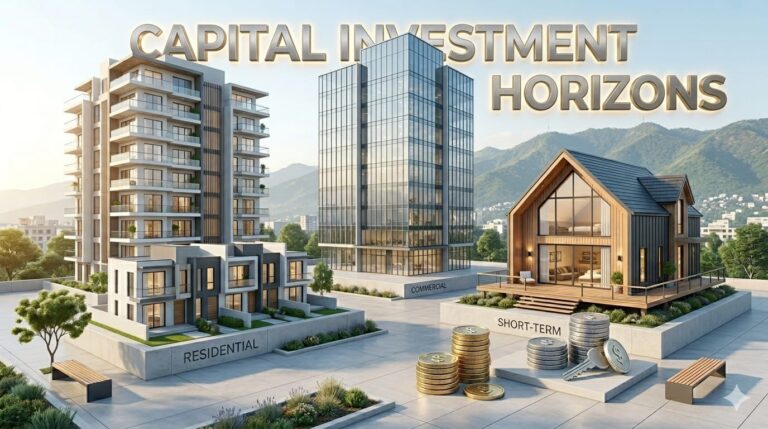
In a Ring Road-driven market, the first preference usually remains credible, government-backed, or highly trusted schemes such as DHA and similar projects. These carry stronger confidence in legality, planning, and long-term execution.
The second strong option is physical open land that can be clearly identified, properly transferred, and genuinely owned.
The third category is lower-budget private schemes, where opportunity may still exist, but only after careful filtering for approvals, delivery, and market trust.
This is a more realistic way to understand the Rawalpindi Ring Road effect. The road can absolutely improve demand in surrounding regions, but the strongest and safest benefit usually appears where investors already have either strong legal backing or real physical ownership.
Why Open Land Can Become More Valuable Along the Corridor
Open land near important approach roads, growth pockets, and transport corridors can benefit in multiple ways. First, better access makes the land more usable for future residential development. Second, corridor-led activity can increase roadside and commercial relevance. Third, once markets, freight movement, warehouses, service businesses, and transport support activity begin shifting outward, surrounding land can start carrying stronger economic value.
This is especially important in regions where the Ring Road may indirectly support future wholesale movement, transport services, business relocation, and commercial expansion outside the dense urban core. That kind of transformation often rewards landowners who hold real, documented land in sensible locations instead of relying only on speculative booking culture.
The Lahore Comparison and the Rawalpindi Reality
Lahore showed that ring roads can change both perception and performance. Outer zones become more acceptable for residents, more practical for investors, and more useful for business once the road starts integrating them into the city’s daily movement.
Rawalpindi can see a similar pattern, but its case may also include a stronger logistics and transport angle because of the region’s airport, motorway, and wider development corridor potential.
That means the Ring Road can support value in multiple layers. It can improve end-user confidence in quality schemes, strengthen outer-belt accessibility, support commercial strips near major routes, and add long-term value to physical land in the wider corridor. The opportunity is real, but it should be understood carefully rather than emotionally.
Final Investor Take
The Rawalpindi Ring Road is likely to become a major value booster for the wider region, but investors should avoid treating every project the same way. The safest category remains credible backed schemes with strong legal standing and clear development strength.
After that, physically ownable open land can often be the better and safer option because its value is tied to real location, real documentation, and real access. Lower-budget private schemes may still offer upside, but only where legality, approvals, and delivery are strong enough to justify confidence.
In the end, the Ring Road should be viewed as a regional growth engine, not a blanket guarantee. It can improve the value of the right schemes, the right corridors, and the right land parcels. But for serious buyers, the real winners will usually be locations with actual access, actual ownership strength, and actual long-term usability on ground.