

In Pakistan, most property investors naturally focus on residential plots, commercial plazas, apartments, and files in developing housing schemes. These are the categories that dominate advertising, dealer conversations, and short-cycle market speculation. But for investors who think beyond the usual city cycle, agricultural land remains one of the most tangible and strategically important real estate assets in the country.
Farmland is not just rural property sitting outside urban limits. It is a productive asset linked with food demand, water availability, local trade, long-term land appreciation, and in some cases, future peri-urban expansion. In a market where many investors have become cautious about pure speculation, agricultural land offers a different proposition: a real on-ground asset with practical use, long holding strength, and multiple routes to value creation.
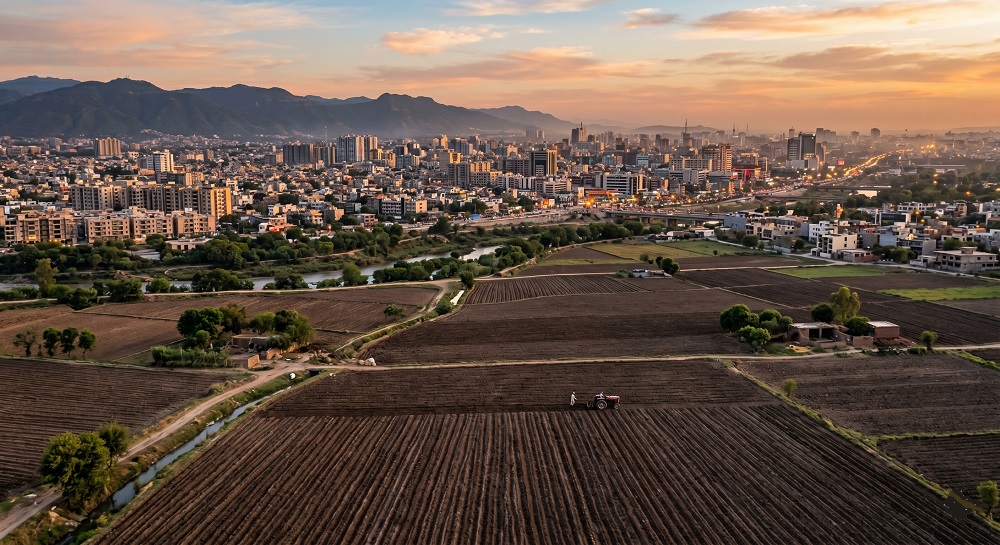
That said, farmland in Pakistan should not be sold through romantic language alone. The right agricultural investment depends on legal clarity, water access, road approach, usable soil, local market linkages, and the investor’s actual strategy. Buying a farm for cultivation is one thing. Buying peri-urban agro land for lifestyle, landbanking, or a managed farmhouse concept is another. Serious investors should understand that difference before committing capital.
Why Agricultural Land Still Matters in Pakistan’s Investment Landscape
Pakistan’s economy still has a deep agricultural base. That alone explains why agricultural land is not a side category in the country. It remains connected to food security, exports, rural employment, and the broader economic system.
For investors, this matters because agricultural land is a tangible and functional asset. Unlike many speculative property plays, land used for farming already has an underlying purpose. It can generate value through cultivation, orchard activity, leasing, or long-term appreciation. In an inflation-prone economy like Pakistan, that practical utility gives farmland a kind of defensive strength that many paper-driven investments do not offer.
But investors should also be realistic. Agricultural land is not automatically a high-yield shortcut. Returns usually come from a combination of three things:
- Land appreciation over time, especially where access, infrastructure, or nearby urban pressure improve demand.
- Lease or tenancy income, where the owner gives land to an operator instead of farming directly.
- Productive farm output, where the investor runs or partners in cultivation, orchards, livestock, or higher-value agricultural activity.
This distinction is important. Many farmland investors in Pakistan do not rely on crop income alone. In practice, the stronger model is often capital preservation plus long-term appreciation plus controlled recurring income.
Different Types of Agricultural Land Investment in Pakistan
One of the biggest mistakes investors make is treating all agricultural land as if it serves the same purpose. In reality, farmland in Pakistan falls into different investment categories, and each should be judged on a different standard.
1. Traditional Productive Agricultural Land
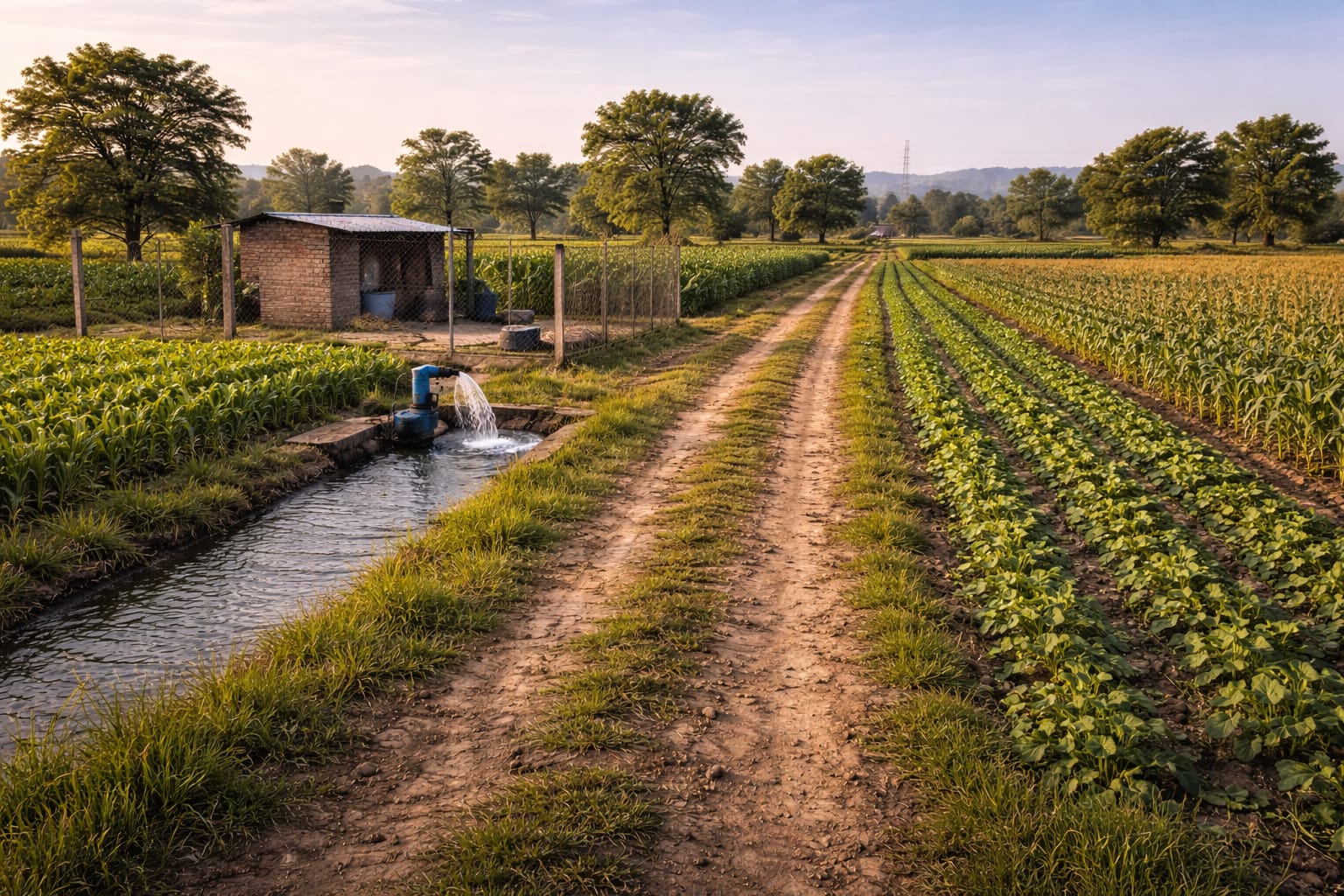
This is the classic farming model. The land is bought mainly for cultivation, leasing, orchard development, livestock support, or long-term holding. Here, the real value comes from productivity, water access, land quality, and local market linkages. This category suits investors who want a grounded, practical asset rather than a lifestyle-driven purchase.
2. Managed or Modern Agri-Business Land
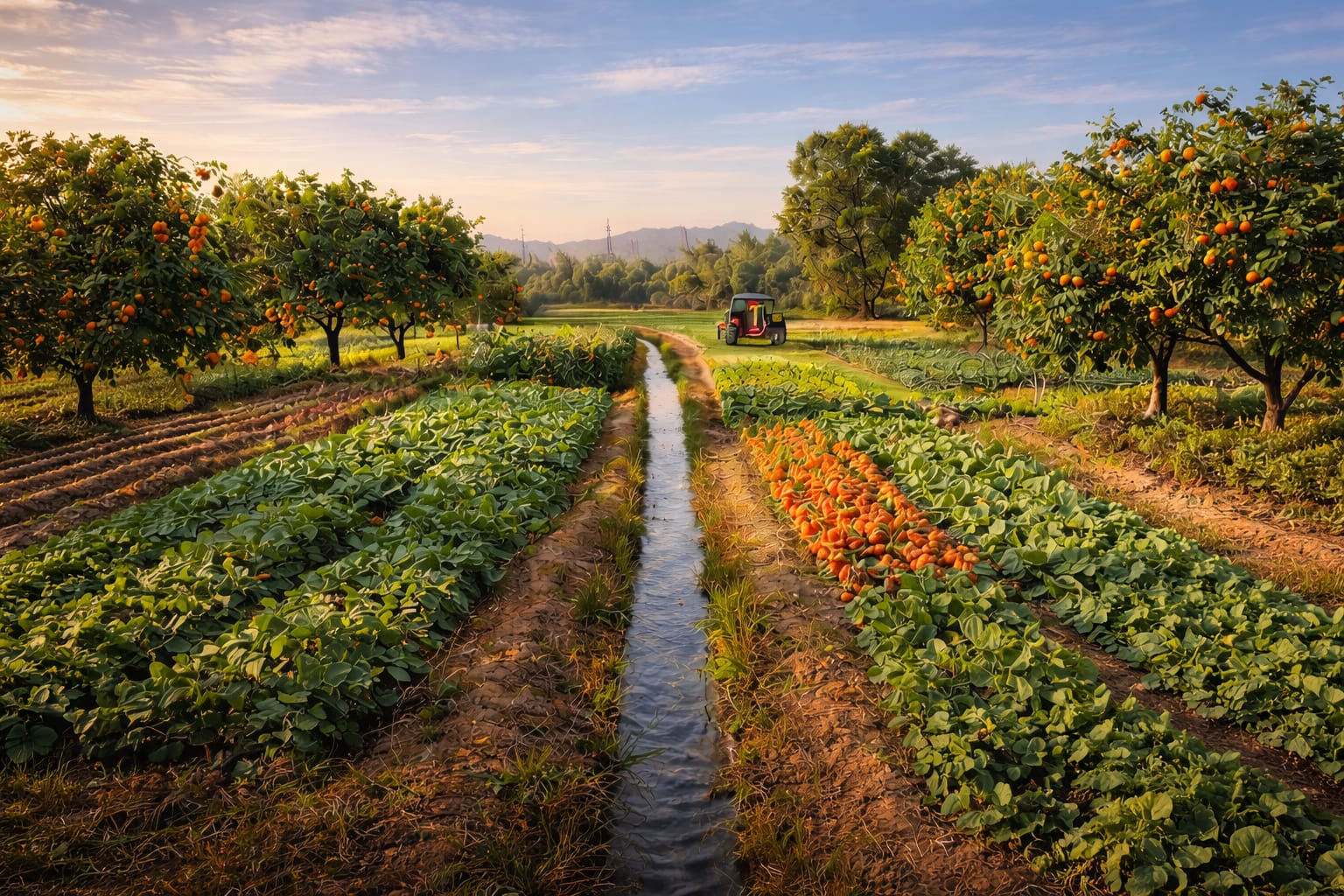
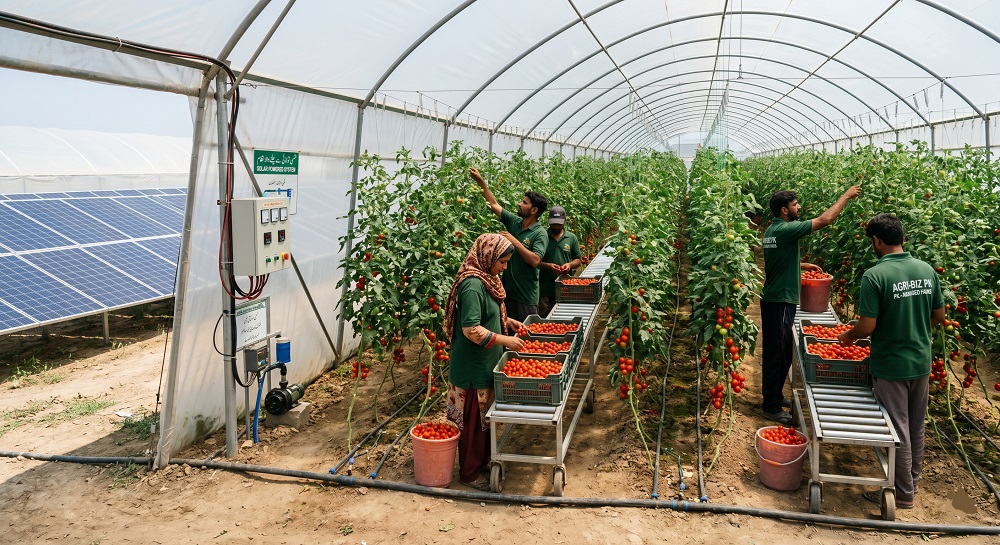
This category includes land used for orchards, tunnel farming, greenhouse operations, branded produce, seed work, nurseries, dairy-linked cultivation, or professionally managed organic farming. The upside can be stronger than traditional cultivation, but only when management, capital planning, labour control, and buyer access are already in place. This is less about passive ownership and more about owning an operating agricultural business.
3. Peri-Urban Agro Farmhouse Land
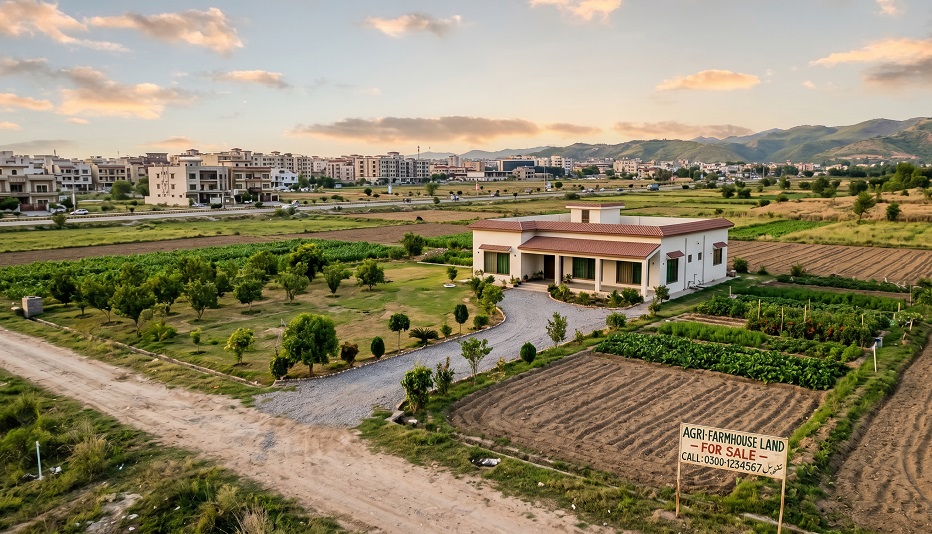
This is different from ordinary cultivation land. Here, value often comes from low-density location, lifestyle appeal, scarcity near the city, future landbanking potential, and private usability. Buyers are not always purchasing for crop output alone. In many cases, they are buying privacy, space, greenery, family use, and long-term capital upside.
4. Self-Use Family Farm or Farmhouse Model
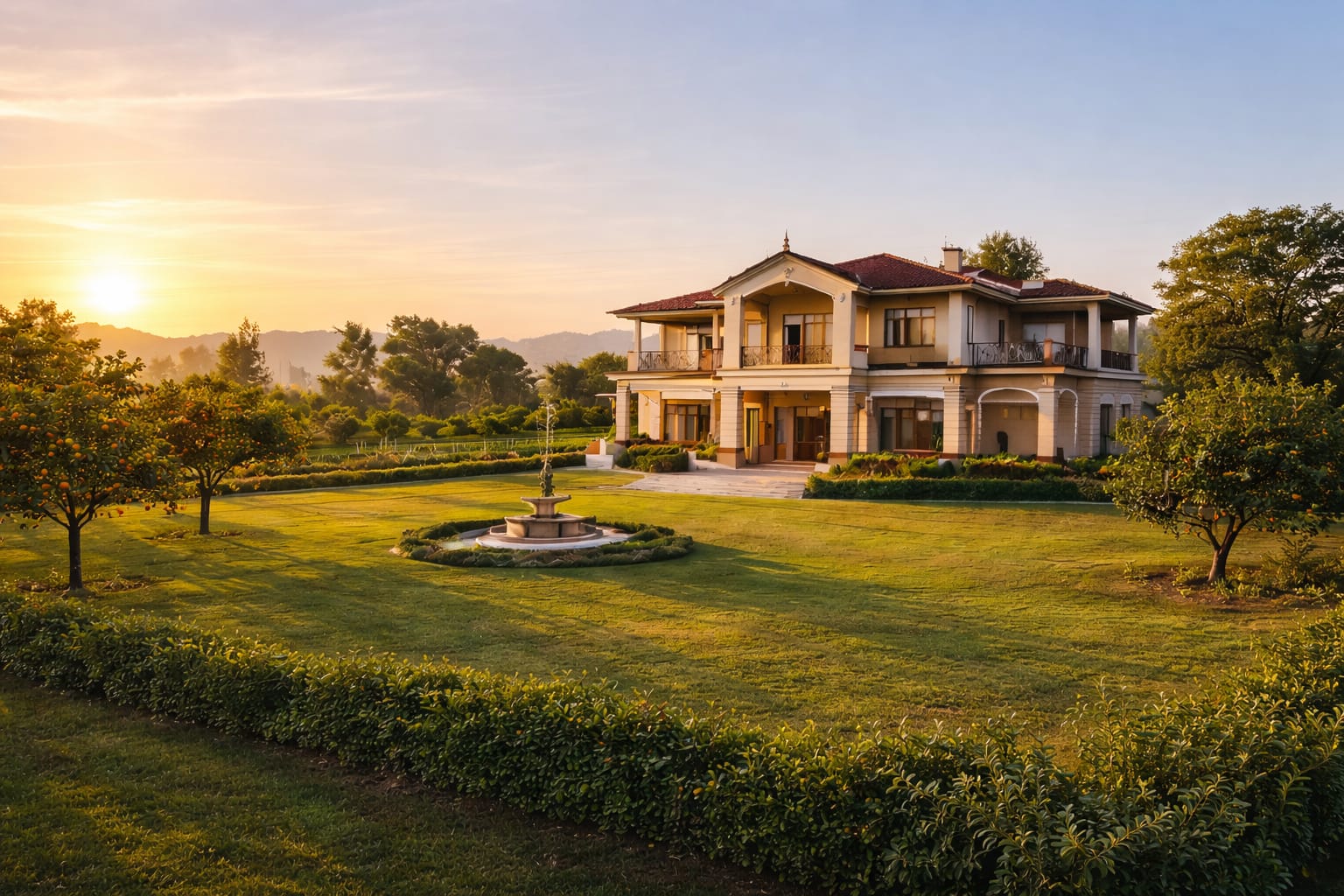
Some buyers are not looking for maximum yield. They want a secure long-term asset for family use, weekend stays, orchard development, controlled small farming, or a future retirement-style holding. For these buyers, the investment logic is different. The focus is less on annual income and more on asset security, private enjoyment, and preservation of capital.
5. Speculative Peri-Urban Agricultural Land
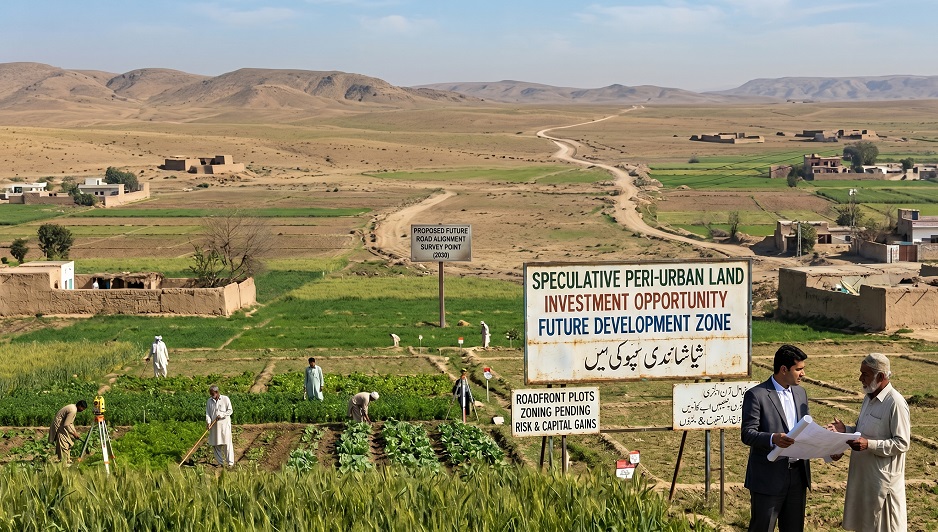
This is land bought mainly because investors expect nearby roads, city expansion, or future development pressure to lift values. This category can produce strong gains, but it is also the riskiest. Here, legal clarity, zoning, conversion assumptions, and actual usability matter far more than dealer claims. Many weak agri deals in Pakistan are sold through future-location stories rather than present-day land quality.
Is the Government Facilitating Agricultural Investment in Pakistan?
The short answer is yes, but with an important clarification.
Pakistan’s government is supporting the agriculture sector, but that does not mean there is a simple retail incentive where ordinary buyers are directly subsidized to purchase farmland as an investment asset. The facilitation is broader and sector-oriented.
In practical terms, policy support has focused more on improving irrigation efficiency, seed quality, mechanization, tube-well modernization, access to agri-credit, and larger investment facilitation for the agriculture sector. These measures improve the operating environment for agriculture, which indirectly strengthens the logic of investing in productive land.
So the real investment takeaway is this: the state is helping create a better background environment for agriculture, but investors still need to do their own due diligence. Government support should be seen as a positive factor, not as a guarantee of profitability.
What Makes a Good Agricultural Land Investment in Pakistan?
A good agricultural investment is not defined by scenery alone. It is defined by whether the land is legally secure, physically usable, and commercially sensible for the purpose you are buying it for.
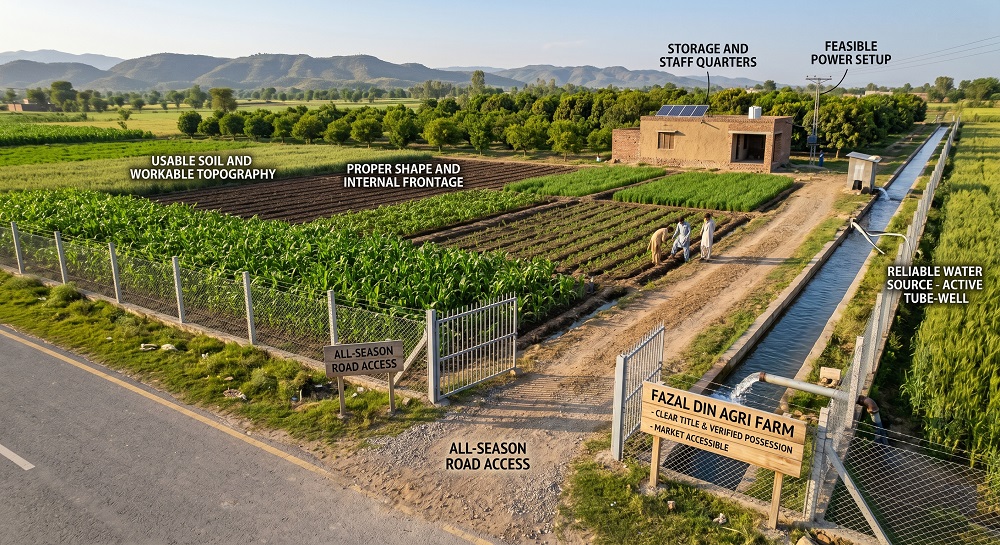
The strongest agri land usually has the following features:
- Clear and verifiable title: ownership should be properly traceable, revenue record should be clean, and there should be no unresolved inheritance, possession, or mutation issues.
- Reliable water source: canal access, tube-well viability, groundwater quality, or another dependable irrigation source is essential.
- All-season road access: land that is difficult to reach loses both operational and resale value.
- Usable soil and workable topography: fertile, level, manageable land is far more valuable than land needing heavy correction.
- Proper shape and frontage: a well-shaped parcel with practical entry and movement is easier to cultivate, fence, manage, and sell later.
- Drainage and flood safety: land that collects water badly or sits in a risky flood belt can become a long-term liability.
- Electricity or solar feasibility: especially important where tube wells, farmhouse use, storage, or modern agri-business activity is planned.
- Labour and local support availability: if the area has no reliable labour, supervision becomes difficult and expensive.
- Market access: proximity to mandis, city buyers, processing units, or logistics routes increases real value.
- Zoning and usage compatibility: this is especially important in peri-urban belts where farmhouse, orchard, or scheme-style use may be regulated.
In simple words, good agri land should be legally clean, physically usable, and commercially sensible.
Must-Have Features vs Value-Adding Features
Investors should separate essential features from premium extras. In agricultural land, the first question is not luxury. The first question is functionality.
Must-Have Features
- clear title and clean possession
- reliable water access
- usable road approach
- suitable soil
- correct land use and legal compliance
- manageable fencing and security setup
Value-Adding Features
- proximity to a major road or city edge
- existing tube well or irrigation setup
- orchard-ready layout
- power connection or easy solar conversion
- farm tracks and internal movement space
- boundary wall, gate, and security cabin
- storage sheds, staff quarters, or a small utility structure
- good surrounding profile with quality neighboring land use
This distinction matters because many sellers market value-adding features as if they replace the basics. They do not. A beautiful location without legal and operational strength is still a weak investment.
Organic Farming in Pakistan: Real Opportunity or Just a Marketing Label?
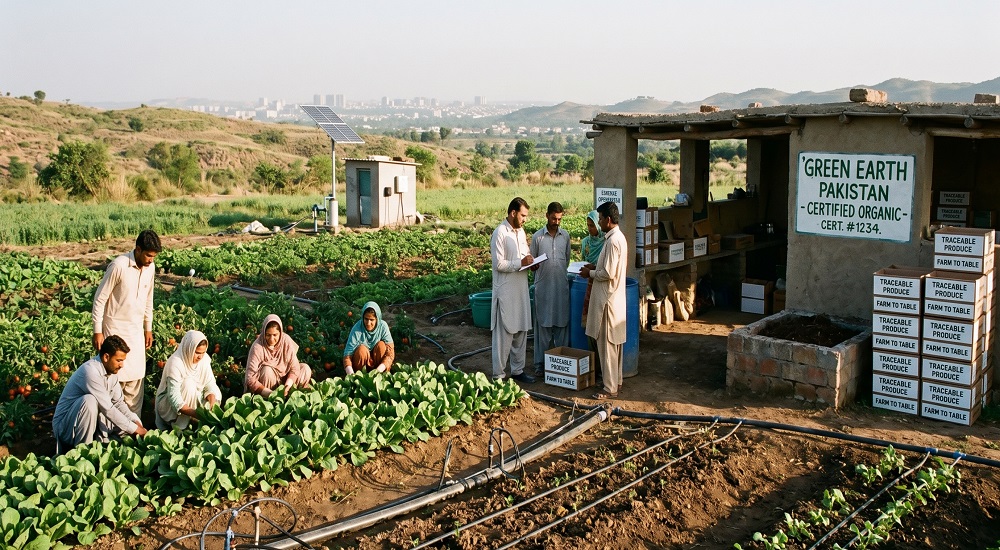
Organic farming is getting more attention in Pakistan because urban consumers are becoming more health-conscious, and premium buyers are more willing to pay for produce seen as cleaner, safer, and less chemical-dependent. This naturally attracts investors looking at organic farmland projects.
But in Pakistan, organic farming only becomes a genuine investment advantage when the operating model is credible. A piece of land does not become a strong investment simply because someone calls it “organic.”
For organic or premium-farming land to add real value, a few things should already exist:
- reliable water planning,
- disciplined input control,
- proper farm management,
- trusted buyer channels,
- labour supervision,
- and ideally some form of certification, traceability, or brand positioning.
Without that structure, “organic” often remains more of a sales pitch than a bankable business model. Investors should treat such projects as managed operating ventures attached to land, not merely vacant land carrying a premium label.
Traditional Farming vs Modern Agri-Business: Know the Difference
Not all profitable agri investment comes from the same model.
Traditional agricultural land usually depends on wheat, rice, seasonal vegetables, fodder, orchards, or lease arrangements. It is often steadier, simpler, and better understood by local operators.
Modern agri-business land may involve orchards, tunnel farming, greenhouse production, nurseries, dairy-linked crop planning, seed work, packaging, or higher-value produce for city buyers. The upside can be better, but this model needs more management, more planning, and more working capital.
In other words, modern agri land can produce better returns, but only when it is run like a business. Otherwise, ordinary productive land with clean basics can be the safer investment.
Transaction Costs in Agricultural Land: What Investors Often Ignore
Many buyers compare farmland only on a per-kanal or per-acre rate, but that is not enough. The real acquisition cost is always higher than the advertised deal value.
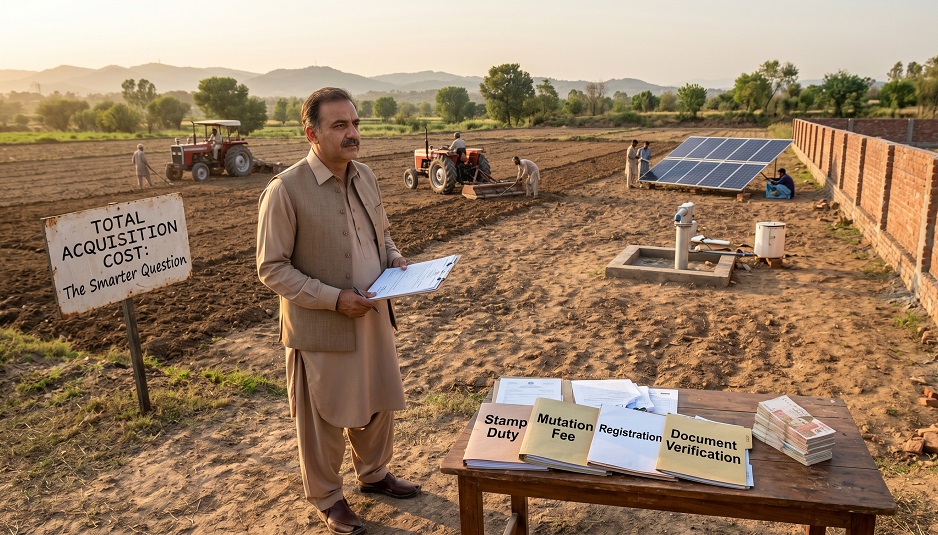
Depending on location and jurisdiction, agricultural land transactions can involve:
- stamp duty,
- registration fee,
- mutation and transfer charges,
- withholding or advance tax implications,
- document verification and due diligence expenses,
- and in some cases, local facilitation and revenue-record follow-up costs.
Beyond purchase, there are also holding and maintenance costs. These vary by land type and usage, but may include:
- boundary walling or fencing,
- tube well installation or repair,
- electricity or solar setup,
- labour supervision,
- soil preparation and levelling,
- security,
- farm track upkeep,
- drainage work,
- and seasonal input costs if cultivation is being managed directly.
This is where many investors make a mistake. Agricultural land can look cheaper than urban property at entry level, but if the land needs extensive operational setup, the total investment can rise quickly. The smarter question is not just, “What is the land price?” The smarter question is, “What will it cost to make this land usable and income-supporting?”
Lease Model or Self-Managed Model?
Before buying, investors should also decide how the land will actually be run.
A lease model is usually better for investors who want simpler management. This can be a fixed cash lease or a crop-sharing arrangement where there is a reliable local operator. Fixed rent is easier to budget. Share-based arrangements can work too, but only where trust and supervision are strong.
A self-managed model can create more upside, especially for orchards, vegetables, nursery work, or premium produce, but it also brings more headache. Labour, theft, water, transport, quality control, and day-to-day supervision all become your responsibility.
Many investors underestimate this point. Good agricultural land is one decision. Running it well is another.
The Peri-Urban Agro Farmhouse Concept: Why It Is Gaining Value
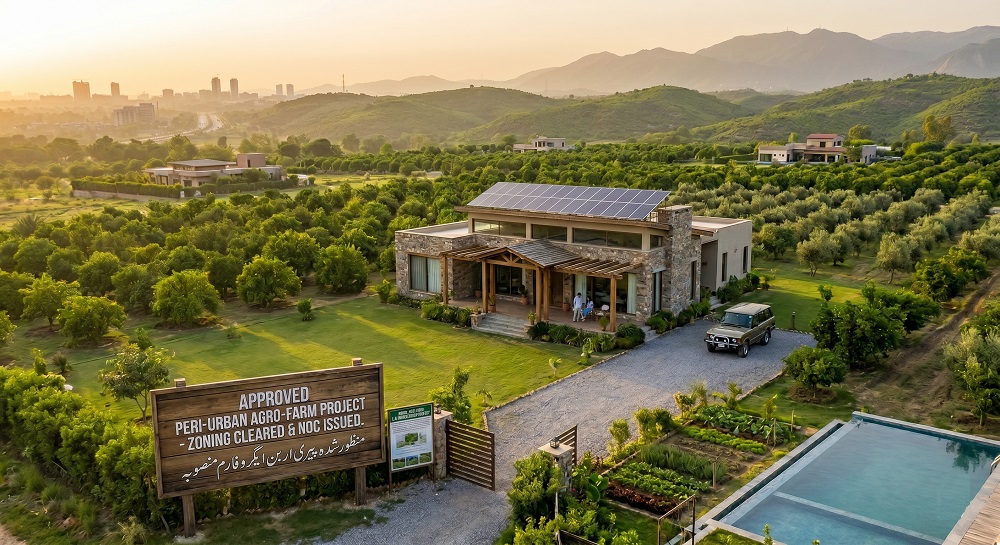
One of the most interesting shifts in the Islamabad-Rawalpindi region is the rise of the agro farmhouse concept in peri-urban belts. This model is different from purely cultivation-driven farmland. It blends lifestyle value, landbanking, low-density living, orchard use, and in some cases, future capital appreciation.
For upper-middle and high-net-worth buyers, peri-urban farmhouses offer a combination that normal city plots cannot easily provide: privacy, greenery, larger land parcels, personal-use flexibility, and a sense of exclusivity. In some locations, investors also see these assets as a hedge against dense urban living and rising city congestion.
This is one reason belts around Islamabad have historically drawn attention. Areas such as Chak Shahzad became premium not because they were ordinary farms, but because they combined location strength, low-density surroundings, scarcity, and long-term desirability. The same logic now influences investor thinking in selected peri-urban farm belts around the wider region.
But this concept only adds value when land use and approval status are clear. In the Islamabad region especially, agro-farm projects are tied closely to zoning controls, minimum size rules, planning regulations, and NOC conditions. So while the farmhouse concept is attractive, it should never be bought on visual appeal alone.
What Local Examples Teach Investors Around Islamabad and Rawalpindi
Serious investors should look closely at the difference between reputation and regulatory status.
Take the broader Islamabad agro-farm belt as an example. Areas like Chak Shahzad, Simly Dam Road, Lehtrar Road, Tarlai-side surroundings, and other low-density peripheral belts have long attracted buyers because of their scenic appeal, relative privacy, and proximity to the capital. On paper, these areas often sound ideal for lifestyle farms, orchard living, eco-retreats, or long-term land holding.
But the real lesson from the region is that premium location alone is not enough. Investors must check whether a scheme, subdivision, or agro-farm concept is approved, cancelled, disputed, unauthorized, or operating beyond planning limits.
This is exactly why well-known names such as Naval Farms, Chak Shahzad farm-style belts, and similar offerings around Islamabad should not be assessed only through dealer language or market buzz. Some locations gain premium value because they are legally clearer, scarcer, and better connected. Others gain temporary hype despite planning or approval issues.
For investors in the Rawalpindi-Islamabad belt, the takeaway is simple: peri-urban agro land can carry strong upside, but the value comes from a mix of legal status, location quality, access, utility, and long-term usability. Without those, a “farmhouse concept” can become an expensive holding with limited practical use.
How Peri-Urban Farmhouses Add Value Beyond Simple Land Holding
When properly selected, agro farmhouse land can add value in ways that are different from ordinary agricultural acreage.
- Lifestyle premium: some buyers are willing to pay more for low-density land that can combine recreation, orchard use, and private built form.
- Scarcity premium: near major cities, large land parcels become harder to find, especially where planning controls restrict density.
- Future location premium: if surrounding access roads, city linkages, or nearby development improve, well-located farm parcels can appreciate strongly.
- Multi-use flexibility: in the right legal framework, land may support orchard use, weekend living, controlled farming, or a long-term family asset strategy.
That is why peri-urban farmhouses are not simply an agricultural story. In Pakistan, they often sit at the intersection of real estate, lifestyle, landbanking, and prestige ownership.
Red Flags Investors Should Not Ignore
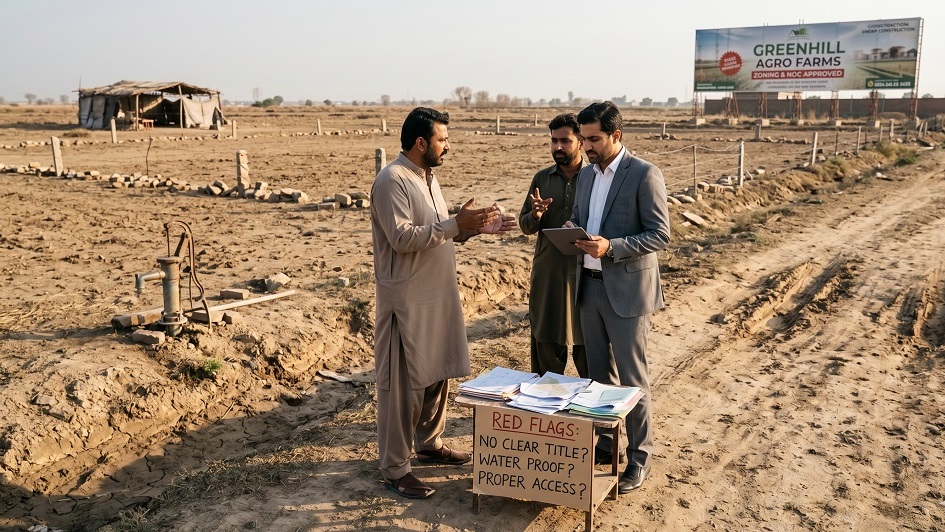
Some warning signs repeatedly appear in weak agricultural land deals in Pakistan:
- unclear ownership chain or missing revenue clarity
- overdependence on verbal promises from dealers or local intermediaries
- water assumptions without proof
- access that exists only in theory but is weak on ground
- disputed possession or informal occupation issues
- illegal subdivision or scheme-style marketing without proper approval
- land sold mainly on “future development” stories with weak current-use value
- hidden setup costs for levelling, fencing, tube wells, security, or power
- mismatch between your goal and the land’s reality, such as buying cultivation land when you actually want a farmhouse lifestyle asset
A serious investor should be much more afraid of hidden land weakness than of missing one attractive deal.
Agricultural Land vs Urban Property: Which Investor Does Each Suit?
Urban Property
Residential and commercial investments generally suit buyers who want faster market activity, easier comparables, and more familiar exit routes. Rental apartments, shops, and urban plots are easier to understand for ordinary investors and easier to market when selling.
But urban property also comes with heavier speculation, higher entry costs in prime areas, and greater exposure to short-cycle hype.
Agricultural and Agro-Farm Investments
These are generally better for investors who value tangibility, longer holding periods, and a more grounded asset base. Farmland can work well for those who want capital preservation, controlled diversification, and the possibility of lease income or productive use.
However, it is not passive by default. Poor water, weak access, family title problems, bad tenancy arrangements, or illegal subdivision issues can significantly reduce the investment case.
So farmland is not “easier” than urban property. It is simply a different kind of investment, requiring a different kind of discipline.
Which Type of Agricultural Investment Suits Which Buyer?
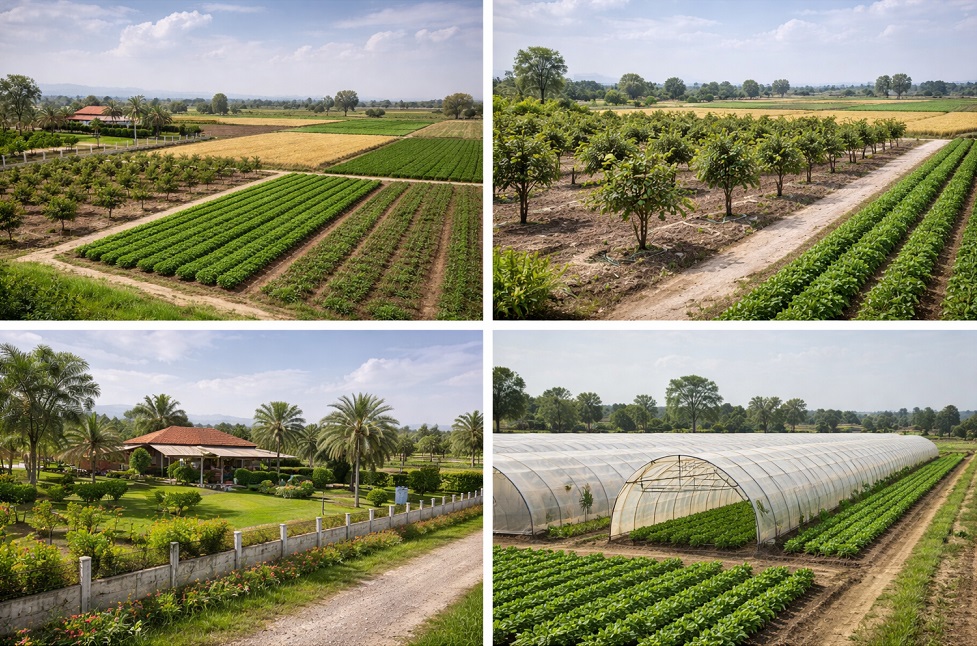
- For conservative investors: productive traditional land with clean title, lease potential, and strong water access is usually the safest route.
- For business-oriented investors: managed orchard, greenhouse, organic, or agri-business land can offer better upside, but only with proper operations.
- For high-net-worth buyers: peri-urban agro farmhouse land may offer a blend of prestige, private use, and long-term scarcity value.
- For family asset planners: self-use farm or farmhouse land can work well where private enjoyment and long-term holding matter more than immediate yield.
- For aggressive investors: peri-urban speculative agri land may offer the biggest upside, but it demands the highest legal and zoning caution.
In other words, the right agricultural investment depends less on hype and more on what role the land will play in your portfolio.
Practical Investor Checklist Before Purchase
Before finalizing an agricultural land deal, investors should insist on answering these questions clearly:
- What exactly is my purpose: cultivation, lease income, orchard, agri business, farmhouse, or long-term landbanking?
- Is the title fully verifiable through proper records?
- Is possession straightforward and undisputed?
- What is the real water source, and how reliable is it year-round?
- What will fencing, levelling, irrigation, and setup actually cost?
- Can the land be reached easily in all seasons?
- Is the surrounding area improving or stagnating?
- Does this land suit my intended use, or am I forcing the wrong strategy onto it?
- If I need to exit in 3 to 5 years, who is the likely next buyer?
That final question is especially important. Good agri land is not just land you can buy. It is land another serious buyer would also want later.
Conclusion
Agricultural land in Pakistan should not be treated as a secondary real estate category. For the right investor, it can be one of the most resilient and practical asset classes in the market. It offers tangibility, long-term value, and in the right structure, recurring income potential as well.
The strongest opportunities are not created by slogans such as “organic,” “farmhouse lifestyle,” or “future growth.” They are created by real factors: clear title, legal compliance, road access, water availability, land usability, and a sensible investment strategy.
Peri-urban agro farmhouses around Islamabad and Rawalpindi add another layer of value because they combine land scarcity, lifestyle demand, and location strength. But these are areas where due diligence matters even more, not less.
For investors looking beyond crowded urban speculation, agricultural and agro-farm assets deserve serious consideration. But the right approach is practical, disciplined, and locally informed.
If you are evaluating agricultural land, agro-farmhouse opportunities, or long-term peri-urban investment options in Pakistan, Manahil Estate can help you assess legal clarity, location strength, usability, and true investment potential before you commit capital.








Agricultural land investment in Pakistan, whether farmland, agro farms, or peri-urban farmhouses, offers long-term value through appreciation, crop yields, and rental income. Recent projects like Agro Excellence Farms have shown land value increases of over 40% in just a few years, highlighting strong demand for structured agricultural investments.
Key Investment Options
1. Farmland
– Purpose: Traditional agricultural use (wheat, rice, sugarcane, fruits, vegetables).
– Income Streams: Crop yields, leasing to farmers, or contract farming.
– Long-Term Value: Land appreciation due to urban expansion and food demand.
– Risks: Water shortages, fragmented ownership, and outdated farming practices.
2. Agro Farms (Structured Projects)
– Example: Agro Excellence Farms (Islamabad).
– Features: Gated farmland communities, professional management, modern irrigation.
– Returns: Investors reported 42.6% appreciation in land values within a few years.
– Passive Income: Crop production + farmhouse rentals.
3. Peri-Urban Farmhouses
– Location: Near major cities (Karachi, Lahore, Islamabad).
– Purpose: Lifestyle + investment (weekend retreats, events, rentals).
– Value Drivers: Rising demand for leisure properties, proximity to urban centers.
– Income Streams: Short-term rentals, event hosting, long-term appreciation.
⚠️ Risks & Challenges
– Water scarcity and climate change are affecting crop yields.
– Fragmented land ownership complicates transactions.
– Speculative pricing in peri-urban zones.
– Regulatory compliance (zoning, agricultural use restrictions).
✅ Strategic Recommendations
– Diversify: Combine farmland for stability with peri-urban farmhouses for lifestyle and rental income.
– Structured Projects: Prefer agro farms with professional management to reduce operational risks.
– Location Focus: Near Karachi (e.g., Gadap, Malir), Lahore outskirts, and Islamabad peri-urban zones for maximum appreciation.
– Due Diligence: Verify land titles, water access, and project credibility before investing.